QUALCOMM
Snapdragon Connect: what to expect from them
Remember the Snapdragon Connect announcement? In that agreement, the mark was used to inform users that the product was built using technologies that provide fast and reliable wireless connectivity. Well, it's just that it's now spread across space.
Yes it's right. In outer space, satellites orbit Earth to perform various functions, and Qualcomm has partnered with Iridium to provide satellite communications for the Snapdragon 8 Gen 2.
We are talking about real satellite communications, not just the emergency call function of the rescue service. It remains to be seen what other features may become available, as phone makers are free to decide how to use the technology. But Qualcomm and Iridium have provided details of what's possible - and that's more than enough to give us some perfectly logical expectations.
Let's try to understand everything in more detail. Iridium is a company that places satellites in low Earth orbit so they can be used for standard two-way communications. For example, you can use a satellite phone (more on that later) to call or text anyone with a phone anywhere, anytime by pointing the antenna straight up at the sky.
Iridium has partnered with Qualcomm to create messages on Snapdragon chips through the Snapdragon Connect program. This is much better for users than a single phone company that can use satellite or relay, as Apple offers with the latest iPhone. But it will also be much more expensive.
The idea is that this feature is built into the chip – currently only in the Snapdragon 8 Gen 2, but we can expect it to appear in all future high-end Snapdragon chips. If a phone manufacturer doesn't want to use it, it simply does nothing and costs customers nothing, except for the slight increase in the price of the chip that comes with it.
If a phone manufacturer is interested in using this feature – Samsung, of course, is already on it – it just doesn't do anything until we want to use it. It will likely drain the battery a bit while not in use, but it won't even be noticeable. In fact, it just takes up space inside the phone and doesn't give away.
But when we need to use it, everything gets more interesting.
-If you are a satellite phone user, make sure you can see the sky.
-Type a message into the app you usually use for this (how convenient!).
-Point your phone at the sky to send it.
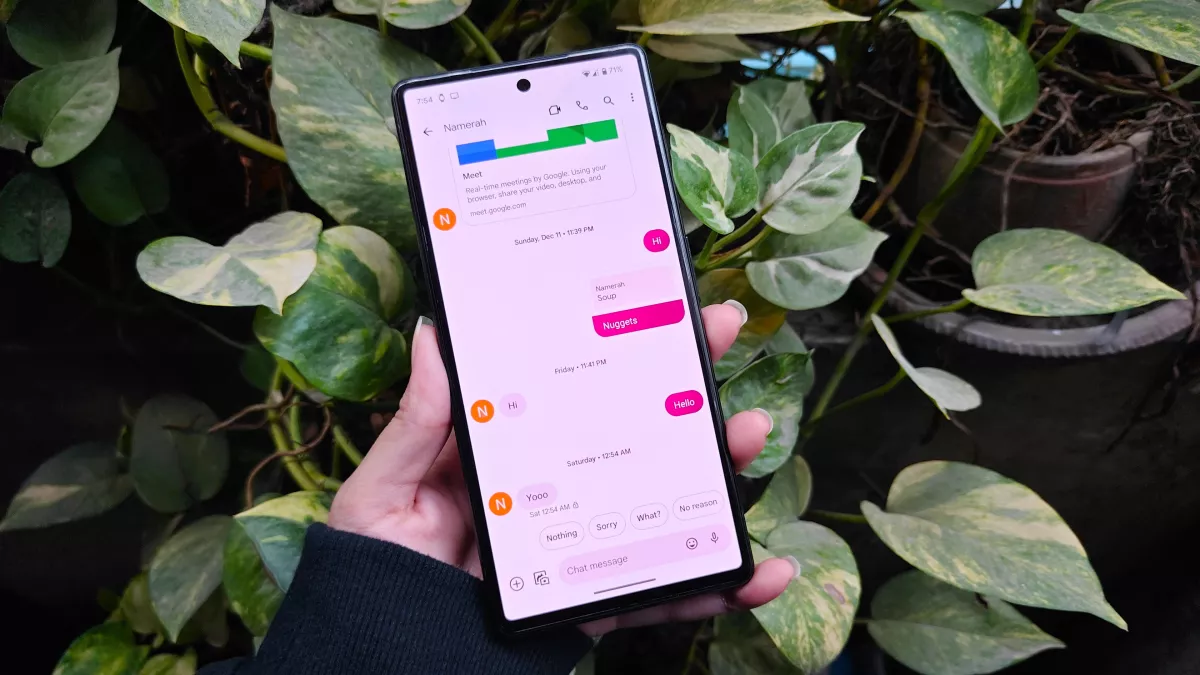
That is all. You can send text messages to anyone because Iridium has the technology to convert what you send via satellite into something that can be sent, like any other text, to anyone with a device capable of receiving it. There will likely be some sort of on-screen alignment feature to help you aim the phone in the best possible way, but you won't have to wait long to get it right.
It looks great and we can't wait to use this feature, but it has two big downsides: it won't be cheap, and using the satellite phone is an experience. It's not a viable replacement for your regular cell phone carrier, nor should it be.
The first problem (and the biggest one for most of us) is the price, and we don't know how the feature will work. The issue is not on Qualcomm's side, it's strictly between the handset manufacturer, Iridium, and you. That's how it should be. The chip manufacturer simply gives the function a chance to work.
You can expect packages for a certain number of messages for a nominal fee, say $20 per month. If you go over the limit, you pay extra, as usual with your carrier. There will likely be several bundle options, and you can expect free trials to be offered as an add-on when buying an expensive new phone. Time will show.
Another downside is that you'll never use satellite as your only way to send text messages. Not the best experience. I know what I'm talking about because I had to.
At this point, everyone using the satellite phone would probably nod in agreement. There is a noticeable delay between when you send a message and when the other party receives it, and vice versa. You can't solve this problem with hardware or external antennas, and in some cases it makes voice calling nearly impossible, so there's nothing wrong with not offering satellite voice coverage.
Everything is better with text messages, but forget about things like notifying you when someone types a reply to you or an instant notification that your message has been viewed. This is not happening. You type, point the phone to the sky to send a message, wait a few minutes, then lift the phone to the sky again, waiting for a response. I'm sure there have been improvements since I last used a two-way satellite phone, but mostly in how it's supposed to work.
Well, enough of the negativity, because this is a great addition to any smartphone. It ensures that you are never out of touch while the battery is charged. This feature is currently only available for phones intended for North America and Europe, but it will work anywhere – in the Sahara Desert, in the Pacific Ocean, at the South Pole.
Being able to call for help via satellite was the best addition to the iPhone. But even better is the ability to use your Android phone to let your loved ones know you don't need their help and just want to say hello.
Source: Android Central(www.androidcentral.com)
 Promoting privacy for camera-based assistive tech