DIGITAL LIFE
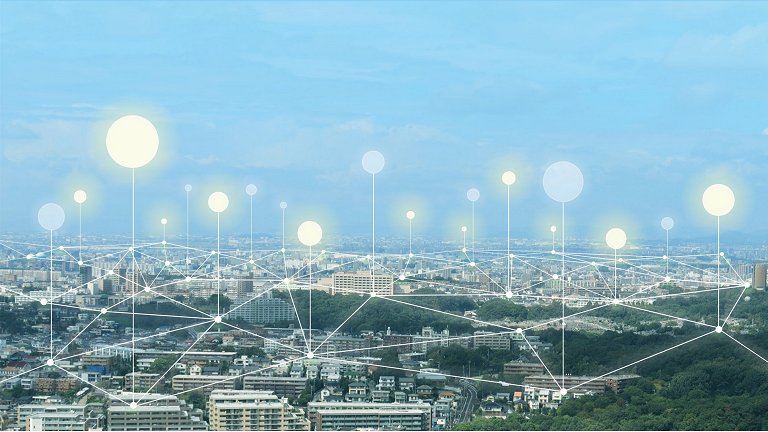
Internet of Energy...The so-called internet of things, when all objects would be integrated into the network, is still far from fulfilling its full potential for a number of reasons, from technical difficulties to simple unnecessaryness.
But another trend, much more justifiable, environmentally desirable and profitable, is emerging: the internet of energy.
Operating in a very similar way to the internet of information, the internet of energy would consist of interconnecting all elements of the energy sector, starting with generation and consumption, but also allowing for the intelligent interconnection of different sources, especially renewable but intermittent sources, such as solar and wind.
Energy in Packets...When information is sent over the regular internet, it is broken into units, called packets, which are marked with their destination. The internet of energy is based on a similar concept: Information tags are added to energy pulses to create units called "energy packets".
Based on requests coming from the edge - be it an industry, a residence or isolated devices, like a traffic light, for example - these packets are distributed and routed through the networks until they reach the point where they are needed.
But there is a problem: Since the power packets would be sent asynchronously - that is, sporadically - the power supply would be intermittent. On the internet of information you can use buffers, or simply wait a long blink for the rest of the image to arrive, but this is not acceptable for energy.
And buffers don't work for the internet of energy because they would require physical devices to store the energy packages that have already arrived, like batteries or capacitors, which makes it more expensive, complicates and reduces the efficiency of the system.
Everything is intermittent... The good news is that a team of engineers at Nagoya University in Japan has developed a solution to this problem in the form of a controller that has a sleep mode and only requests power when needed.
The equipment is part of an approach known as "sparse control", where the consumer end actuators are active part of the time and in sleep mode the rest of the time. In sleep mode, they do not consume fuel or electricity, leading to efficient energy savings and reducing environmental and noise pollution. Although sparse control has been tested with a single actuator, it does not necessarily provide good performance when multiple actuators are present. The problem of determining how to do this for multiple actuators is called the "maximum shutdown control problem".
The Japanese team's innovation consists of a model control scheme to deal with multiple actuators that, instead of trying to avoid inserting bursts into the network, assumes that the network is intermittent, but the equipment needs to receive packets continuously. .
For this, the system has a traditional sleep mode and an awake mode, but in which it obtains the predicted energy packets and controls their release for when they are needed. Because it was made controllable, the model then came to be called "Gramian sparse control" - the Gramian, or determinant of the Gram matrix, is the indicator that a linear system is controllable.
The team's tests showed that the mechanism works even for equipment seen as absolutely continuous, such as electric motors.
"We can see our research being useful in controlling production equipment motors," explained Professor Shun-ichi Azuma. "This research provides a method of configuring the control system based on the assumption that the power supply is intermittent. It has the advantage of eliminating the need for batteries and storage capacitors. We hope that it will accelerate the practical application of the energy internet based on energy packets."
Article: Maximum Turn-off Control for Discrete-time Linear Systems
Authors: Takumi Iwata, Shun-ichi Azuma, Ryo Ariizumi, Toru Asai
Magazine: International Journal of Robust and Nonlinear Control
DOI: 10.1002/rnc.6283



No comments:
Post a Comment