DIGITAL LIFE
3D printed gun: the dangerous trend spreading in Europe
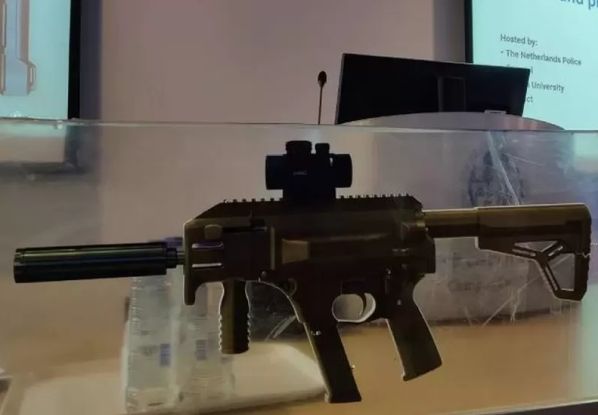
The trend is dangerous, mainly because some semi-automatic and automatic models can already be produced this way.
The world's first 3D-printed working firearm was created in May 2013 by a group called Defense Distributed (DD). In 2014, 28-year-old Yoshitomo Imura was sentenced to two years in prison in Japan after police found a total of five firearms. He designed them in part and then produced them with a 3D printer. According to the Public Ministry, the weapons were functional and two of them could be equipped with “lethal ammunition”. In August 2018, a federal court in Seattle, Washington, temporarily suspended distribution of gun software that can be downloaded from the Internet and made with a 3D printer. A little later, it turned out that design files for 3D-printed weapons will be available despite the court ban.
Now the BBC on this reported, that officers from the Metropolitan Police's Special Squad discovered a "makeshift 3D firearms factory" in London in early October. According to the report, the British National Crime Agency (NCA) classified the weapons produced there as a “new threat” because they are no longer unreliable, single-shot models, but more durable. Two men are suspected of operating the plant and producing the weapons. Police did not provide details on the exact amount of weapon parts seized.
The BBC wrote that 80-90 percent of the gun parts made at the factory came from 3D printers. The other components, like the barrels of the rifles, were made of metal, because they still have to be produced in the traditional way. Matthew Perfect, head of the NCA's National Firearms Center, expressed his concern and said that no one in Britain wants to see these weapons on the streets. A major safety issue with 3D printed guns is that they are difficult to track because they do not have a serial number. Fortunately, the number of these models is still small compared to conventional firearms. Criminal or extremist organizations also use them less, because they can obtain weapons illegally in other ways.
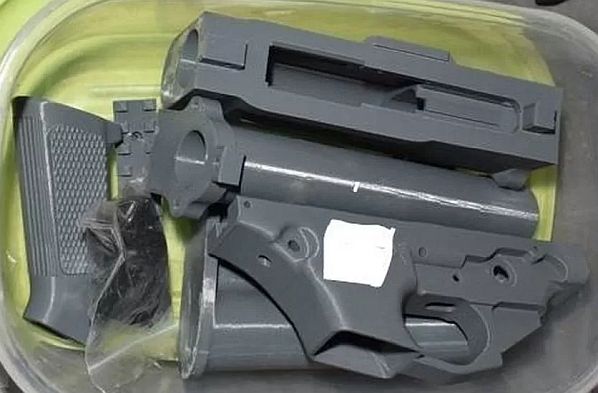
Weapons produced by 3D printing are an alternative for those who do not have access to illegal copies. However, there are more and more extremists who want to produce and use weapons with 3D printers, a trend that can be observed across Europe in this area. There have been cases of this type in Spain, Sweden, Germany, the Netherlands and even some in the UK. Right-wing extremist groups are particularly interested in this. Your situation is facilitated by the fact that many materials for the production of 3D-printed weapons are available on the Internet.
The novelty is that 3D printers are used to produce automatic weapons that can fire several successive shots and are more powerful. This includes a semi-automatic model called the FGC, which is designed to only use parts that are not regulated in the European Union. According to experts, with the development of 3D printing technology on metal, the problem may worsen in the coming years. This makes firearms even more durable and reliable. However, these weapons are unlikely to be fully 3D printed in the near future.
mundophone


No comments:
Post a Comment