TECH
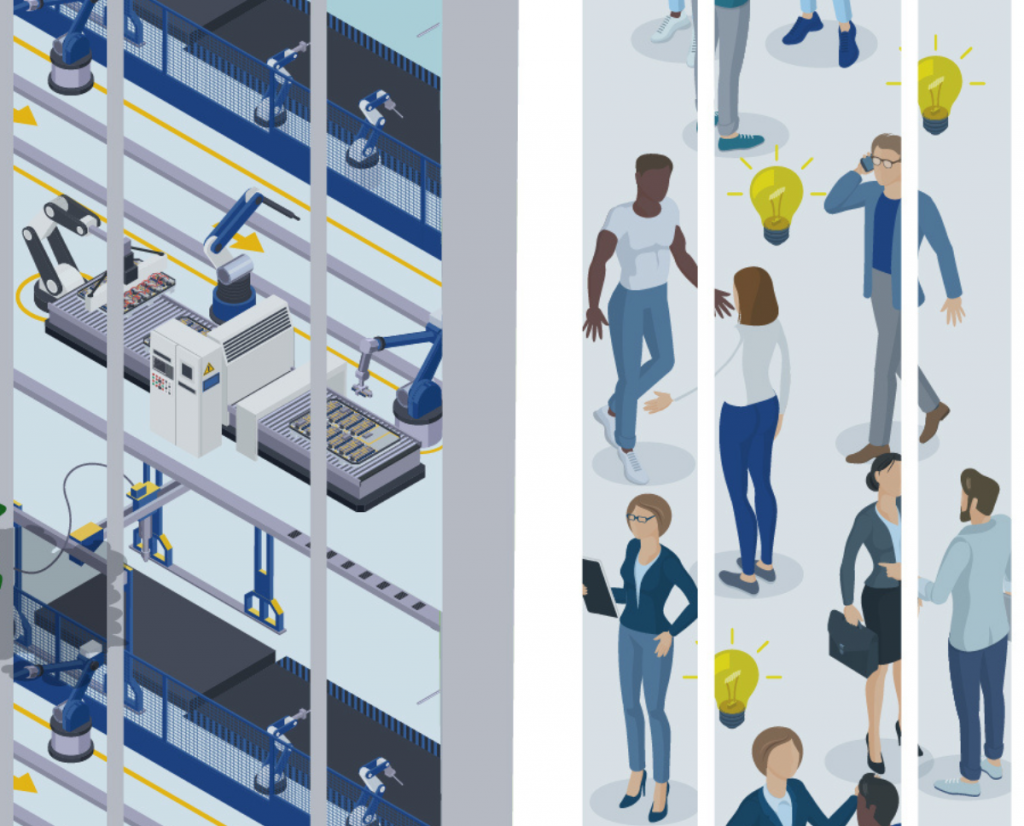
What will work be like in 2030?
Epson explores the trends that will shape jobs in 2030 and considers how companies can prepare for the future.
The world of work and industry has changed immensely in recent years. Remote work and automation have become the norm in many industries.
However, the trends ostensibly caused by the pandemic existed before. What happened in 2020 only accelerated the development that had already transformed markets and the business environment before the corona virus.
Already today we can have an idea of how we can work, produce and manage in the coming years. In fact, it's up to technology innovators and big employers like Epson to help change these things — for the better. After all, our company has nearly 80,000 employees worldwide.
So what are the new trends we are embracing that will help shape the future of work?
Megatrends to watch... If the past decade has taught us anything, it's that the ability to adapt to emerging trends and global circumstances can catapult a company to the top and to success, or bring it down. Leaders need to be prepared for anything and start thinking about how their employees can prepare for 2030.
Everything that can be automated will be automated, from physical automation with SCARA robots that manufacture and assemble products to virtual automation with software (ro)bots to perform repetitive office tasks. From an industrial standpoint, this will manifest itself in techniques such as distributed manufacturing. In offices, masses of administrative staff will be redeployed to other jobs. Robotic process automation and artificial intelligence will manage accounts, train and onboard staff.
Employee ideas, freed from tedious manual processes and soul-killing tasks, will be the most important asset of the future. These need to be channeled into real innovation, and this can only be achieved through collaboration and sharing. What exploded in the pandemic will continue to evolve with new ways to connect and share beyond the confines of the office.
Today, hybrid meetings play a key role in creating a collaborative space. More innovations in versatile display devices such as projectors will help bridge the gap between remote workers and those in the office. Enhancing the user experience by displaying full-size projections of remote participants ensures equal placement and greater presence.
Human ingenuity that meets innovation and collaboration pushes boundaries. However, the world's resources are limited, as are the human brain and body. Therefore, sustainability must be at the heart of work and industry. It also demands that corporations not only grow their businesses, but also think of others and invest in communities, startups and partners that will help drive greater success.
Epson, for example, enriches lives, communities and organizations by focusing on honest profit rather than excessive revenue growth. It is also committed to supporting a sustainable society through open partnerships and collaborations, working with charities and reducing reliance on underground resources.
Last but not least, lifelong learning awaits all of us.
Breakthrough innovations and technologies are undoubtedly rapidly changing the scope, speed and scope of work. As the workplace is about to change dramatically due to automation and digitization and the emergence of entirely new industries, skills development and a serious commitment to lifelong learning will be key to meeting the needs of the workforce of the future. .
In short, the emerging workforce will be those who know how to use data, work well with artificial intelligence and robots, and have the initiative to examine what skills the future requires to keep up with the evolution of technology.
by: mundophone




No comments:
Post a Comment