TECH
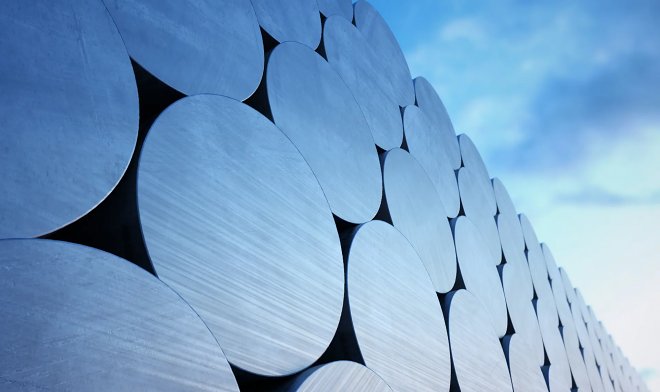
Researchers at the Swiss Institute of Solar Technology brought together a team of scientists from seven European countries and received funding from the Horizon Europe Foundation to develop a promising aluminum energy storage project. The project is called "Reveal", it aims to solve the key problem of green energy - how and where to store for the winter all the energy that windmills and solar panels will generate in the summer? The attention of scientists today is focused on redox processes in metals.
According to calculations, pure aluminum has a specific energy consumption of 8.7 kWh per 1 kg and 1 cu. m of aluminum can accumulate 23.5 MWh. That's 33 times more than Tesla's best electric vehicle batteries and 50 times more than commercial lithium-ion batteries. If aluminum is crushed into balls with a diameter of 1 mm for ease of use, just ten buckets of aluminum in the basement of a typical home can provide energy for 1 to 1.5 years.
Initially, aluminum must be charged, to which aluminum hydroxide is converted to pure aluminum by electrolysis. The process efficiency is 65%, it requires a temperature of 800℃, special inert electrodes and industrial equipment, so the procedure will be carried out in special stations. But the reverse process of energy release can be arranged in the same basement in the house, the reaction of aluminum with the water needed for this takes place at a temperature of not more than 100 ℃. The output is aluminum hydroxide, hydrogen for fuel cells and some heat for space heating.
There are also alumina technologies that require higher temperatures, and scientists are tasked with exploring other methods to oxidize and reduce aluminum. The main thing is that after discharging, the aluminum battery is ready to work again, so the same metal ball can be used almost infinitely. Pure aluminum can be stored even outdoors, it is safe, and the oxide layer on the surface is less than 1 nanometer, so the energy loss will be less than 1%.
The Reveal project is technically complex and we shouldn't expect results from it until 2026. But if it succeeds, given Earth's huge aluminum reserves, humanity could achieve ideal energy storage devices.
Source: Swiss Institute of Solar Technology


No comments:
Post a Comment