DIGITAL LIFE
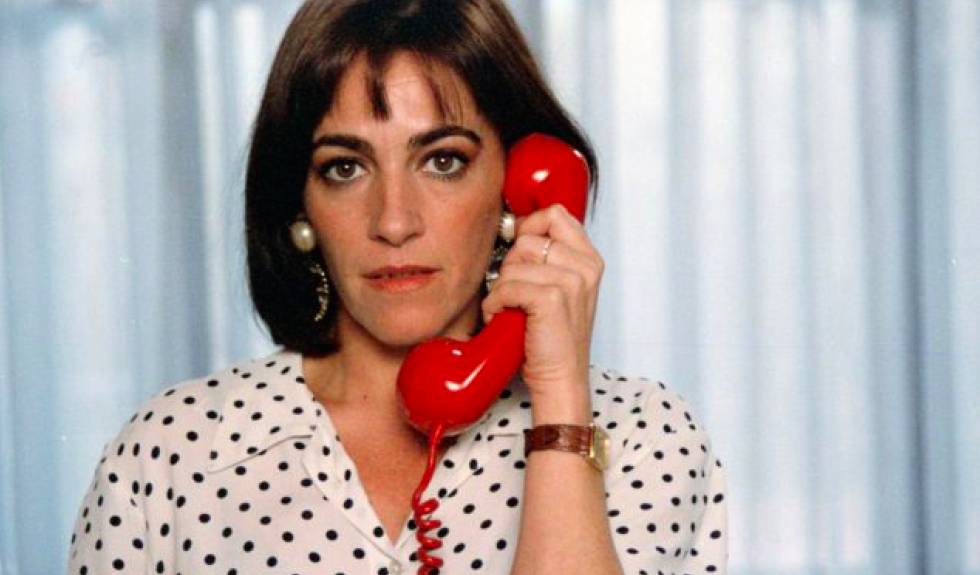 The last paradox of modern life: why do we get stuck on the cell phone, but we hate talking on the phone?
To start a text, Hemingway said to himself, "Write the truest phrase you know." In this case, it would be: the psychologist Cristina Pérez, from Siquia, answered by audio messages to the questions we send you by email. This meta-journalistic curiosity does not matter, it does not alter the quality of its answers, it only illustrates the variety and fluidity of options with which we can communicate today. Did we receive an email? We respond with an audio. Got an audio from WhatsApp? We respond with a text. Did we get a phone call? We do not respond. We waited. We waited. And we wrote, "Did you call me? I can not talk, I'd better write. " The paradox of the great addiction of the 21st century is that we are stuck on the cell phone, but we are phobic about phone calls.
Vow of silence
It is a trend more present among the younger, but common in all age groups: in Spain alone, the daily use of instant messaging applications like WhatsApp, Telegram and Facebook Messenger is almost double that of fixed and cellular phone calls, according to the Telefónica Foundation's Report of the Digital Society in Spain of 2018. Not only do we prefer instant messaging to phone calls, we also prefer those messages to interact with others. Or at least that's what 95.1% of the Spanish population said they would prefer (the face-to-face only has 86.6% popularity). The telephone call-which, until not long ago, we waited with joy or tolerated with resignation, but never avoided with a universal rejection-became an intrusive and troublesome, disturbing and tyrannical presence, but why? "One of the reasons is that when we receive a call, it interrupts something we were doing, or we just do not feel like talking at the moment," explains psychologist Cristina Perez. "On the other hand, it also demands from us an immediate response, contrary to what happens in written communication, which allows us to think well in what we mean. And the third reason would be that he could not know in advance what the duration of the call would be, "he adds.
Introverted and delivered to screens
Losing time on a phone call is a scary prospect. However, according to a world report from Deloitte, we consult our screens more than 40 times a day, and one in four people do this between 100 and more than 200 times.
Perhaps the most valuable thing that our interlocutor demands in a connection is not time, but concentration. Could the hatred of talking on the phone be a symptom of a deeper problem, such as an attention-deficit disorder? "In principle not," replies psychologist. But "yes, it is possible for a person with attention deficit difficulty having a long telephone conversation and even sometimes losing the thread and turning their attention to something else, just as it would happen in a face-to-face conversation , but that does not mean he develops a hatred of talking on the phone. "
Cristina Pérez warns: "Yes, it may be a sign of an introverted personality. The immediacy of a phone call makes introverted people uncomfortable in them. They are people who rely heavily on observation and over the phone can not examine the speaker's expression. If a social interaction is already uncomfortable for them, it is much worse when they do not have that visual help they use so much. In fact, this type of personality prefers written communication to the spoken one ".
Unfortunately, for these introverts, there is no formula that frees them from all the calls, although the identifier of the number you are calling gives them some authority. "When you get a call, it's up to you whether it's time to take it or leave it for later," says the psychologist. "If you decide to take care of it and need to cut it, the best way to do that is assertively (setting limits, although that initially costs us a bit, since we may think the other person will be upset, but it's a matter of training and patience), but you must also detect the right time to cut. "
The problem is not only that our interlocutor wants to speak ad infinitum. He often wants from us a quick response if it is, for example, a working call. The terror of not having time to think about what we must answer also prevents us from answering the telephone. The psychologist also has a trick for these cases: "If you ask for an immediate response that you can not give at this time, a very useful phrase is 'I will think calmly and tomorrow we will talk', since if we are not sure about an answer, it is best to postpone it, because the immediacy makes us act impulsively and it is possible that we later repent of the response given. "
Goodbye to the dialectic?
Aversion to the conversation of so-called "mute generation" could have more consequences than just avoiding social gatherings. "The price to pay for being born in this generation is often a lack of skill when starting or holding a conversation, although these people may spend hours and hours on the cell phone because they are more focused on what their device can offer them ( which will sometimes be a conversation with another person, but not face to face). They are generations in which the addiction to new technologies is the order of the day, and the problem is not only that they do not value how good a conversation can be enriching. The effects of excessive use of the cell phone also affect their personality, since they are people with low tolerance to frustration and in need of a continuous social reinforcement, that occurs through tanned. In short, the technology is good provided it is used in a way compatible with the daily life of the person, that is, when it does not interfere in their social, work or personal life, "says the psychologist.
With more than 1.5 billion users worldwide, there is no point in demonizing the use of WhatsApp. In fact, psychologically it has many advantages. "Written communication allows us to choose the moment, to write our response well and to re-read it; to verify if it is clear what we wanted to say and even to say things that we would not dare in a telephone conversation ", explains Cristina Perez.
Because they are different channels of communication, they activate distinct brain regions: "When we have a conversation or send an audio, the frontal lobe is activated, because it is linked to speech. It also increases the activity of temporal lobes, in charge of processing auditory information, "continues the psychologist. On the other hand, "if we decide to send a text message, just as in a conversation or an audio message, the frontal lobe is activated, but to interpret the words and the language we use both to write it and to read it , the parietal lobe enters into action. The visual information that comes to us is received and processed by the parietal wolf, and this helps us to read and write, since we recognize the words. " Elpaís-Espanha


No comments:
Post a Comment