PURISM
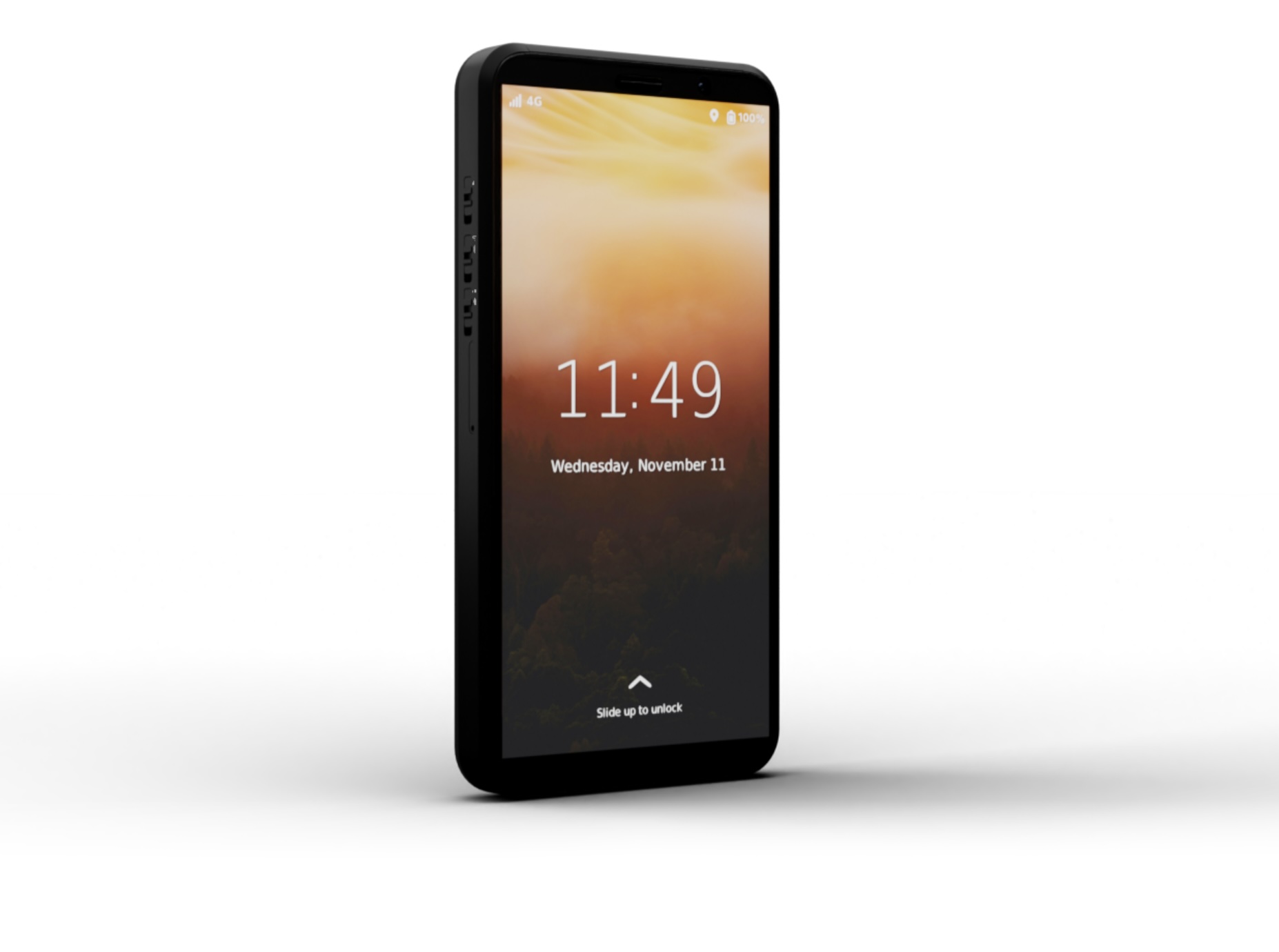
Linux smartphone with 8-core RISC-V chip and 8 GB RAM goes official with hefty price tag
Purism has announced the Librem 5 v2, a follow-up to its privacy-focused Linux phone, and the headline change is the processor. The original Librem 5 ran a quad-core NXP i.MX 8 ARM chip; the v2 moves to the SpacemiT K1, an eight-core RISC-V SoC. Purism is funding it the same way it funded the first one, through a rolling crowdfunding campaign on its own site that opens to the public on November 17 and runs until February 15, 2027.
Purism is a brand that is well-known for their open-source hardware efforts. The Librem 5 smartphone was launched all the way back in 2019, and was powered by an 1.5 GHz quad-core ARM CPU paired with 3 GB of RAM and 32 GB of storage.
However, for the Librem 5's successor, which the company has dubbed the Librem 5 v2, a massive architectural change is being planned. To be precise, the smartphone will now go for a RISC-V chip instead of an ARM one.
But make no mistake - the SpacemiT K1 is not going to take on the Snapdragons and Dimensity-s of the world anytime soon in terms of raw performance. The amount of compute on offer is very humble, and only sufficient for basic day-to-day tasks. After all, that's all what a no-nonsense smartphone really needs, to be honest.
The original Librem 5, a 5.7" smartphone running the company's in-house Linux-based PureOS — which, the company is at pains to point out, does not follow the herd in using Google's Android Open-Source Project (AOSP) as its base — on an NXP i.MX 8M quad-core Arm Cortex-A53 system-on-chip. Its successor retains the same overall design, with the same 720×1,440-resolution display, but moves to the SpacemIT K1.
It's a big move: not only does the K1 boast twice as many processing cores but it's based on an entirely different architecture. Where the i.MX 8M is built on the proprietary Arm architecture, the SpacemiT K1 uses the free and open source RISC-V architecture — though SpacemiT's particular implementation is proprietary, as with NXP's Arm chip. At the same time, the phone gets more than twice the RAM, going from 3GB to 8GB, and four times the internal storage, going from 32GB to 128GB expandable via microSD.
The shift hasn't changed the company's privacy focus, though. The redesigned phone still includes hardware "kill-switches" for the microphone, camera, cellular, and combination Wi-Fi and Bluetooth radio modules, while the radios themselves are on user-removable modules to turn the phone into a small-scale airgapped tablet. The 4,500mAh battery is removable and user-replaceable, there's a 3.5mm analog audio jack, dual-SIM support, and support for using an external display via the USB Type-C port which is also used for charging. There's even a smartcard slot.
The smartphone will feature a 5.7-inch display with a resolution of 720 x 1440, which is the same as before, color reproduction or brightness performance details have not been shared. Other notable features include 13 MP and 8 MP rear and front cameras, a 4500-mAh removable battery, dual SIM and SD card support, a 3.5-mm audio jack, hardware kill switches, SD boot support, and a Type-C port.
According to Purism, the Librem 5 v2 should run cooler, faster, and have longer battery life. Of course, the Linux-based smartphone will continue running PureOS. The product is ready for launch on the 17th of November, and the funding phase will continue till 15th February, 2027.
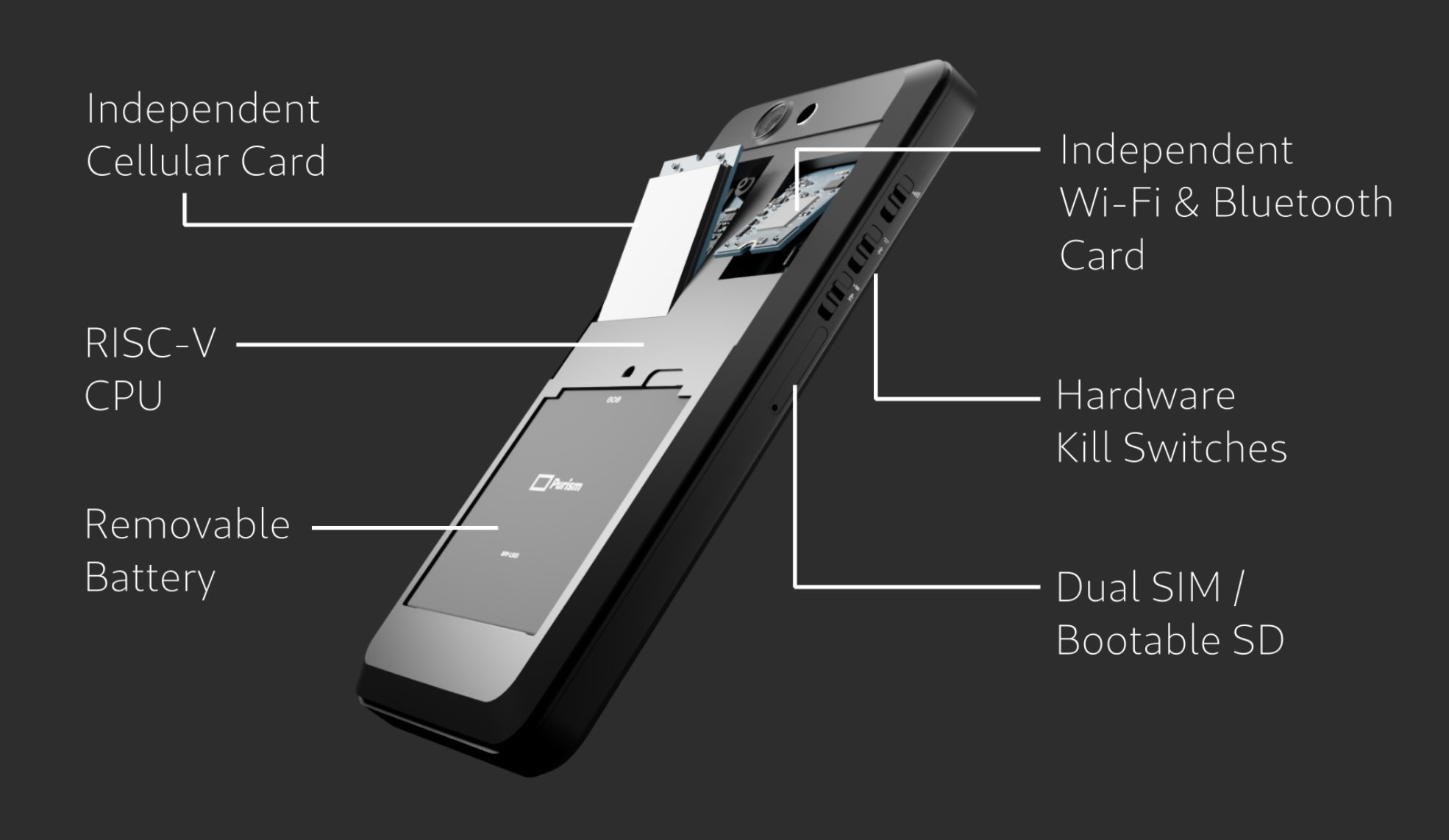
The rest of the spec sheet reads like a list of everything owners complained about on v1. Memory goes from 3 GB to 8 GB, storage is 128 GB, and the microSD slot jumps from roughly 10-14 MB/s to 80 MB/s, quick enough that Purism says you can boot an OS from the card. The 5.7-inch 720 x 1440 display carries over, as does the removable battery, now rated at 4,500 mAh. The cameras are 13 MP at the rear and 8 MP at the front, backed by hardware video encoding.
Purism’s three hardware kill switches remain, physically cutting power to the cellular modem, to Wi-Fi/Bluetooth, and to the microphone and cameras. The cellular and Wi-Fi modules are still replaceable. The modem is an improved 4G part, with 5G listed only as a future module. There is also a smart card slot, a 3.5 mm jack, and USB-C with display output. Purism’s spec table says dual SIM, although LinuxGizmos reports the company is still evaluating how the second SIM will be implemented, so treat that one as provisional.
Software is PureOS, Purism’s Debian-based distribution. Android apps are handled through Waydroid, where they cooperate.
Why RISC-V, and why it is a gamble...The appeal for Purism is easy to see. RISC-V is an open instruction set, which suits a company whose whole pitch is controlling every layer of the stack. Purism also argues the first phone was held back by heat more than by compute, writing that “performance on the Librem 5 is often limited by thermals, not CPU power.” It claims the new board runs cooler and faster and lasts longer per charge. Those are claims, not measurements, and there is no hardware to test yet.
The company is unusually candid about the software, too. Its campaign page admits that “RISC-V is not yet drop-in and boot-up ready for PureOS.” Mainline Linux support for the K1 has been moving along, but a phone needs far more than a kernel that boots. Modem integration, power management, GPU acceleration and a camera pipeline all have to land before this is a daily driver, and that is what the next year and a half is for.
The price and the wait...The phone costs $1,599 with no service bundled, or $129 down followed by fifteen monthly payments of $99. Early backers get extras rather than discounts, such as a Founders Edition and an accessories pack for the first 100 public orders. The campaign’s goal is 2,500 orders, and a 5,000-order stretch goal would move electronics manufacturing to Purism’s own facilities in the US.
Timing is the hard part. Purism’s FAQ puts the dev kit six to seven months after the campaign closes and the phone 14 to 15 months after, which lands around May 2028, with a beta for backers in Q4 2027. The campaign page also says plainly that rewards are not guaranteed and that there are no refunds. Anyone who waited for the first Librem 5, announced in 2017 and first shipped in 2019, will weigh that carefully. For everyone else, it is one of the more serious attempts yet to put a full-size Linux phone on an open ISA, and the interesting question is whether the software catches up before the hardware ships.
by mundophone


No comments:
Post a Comment