TECH
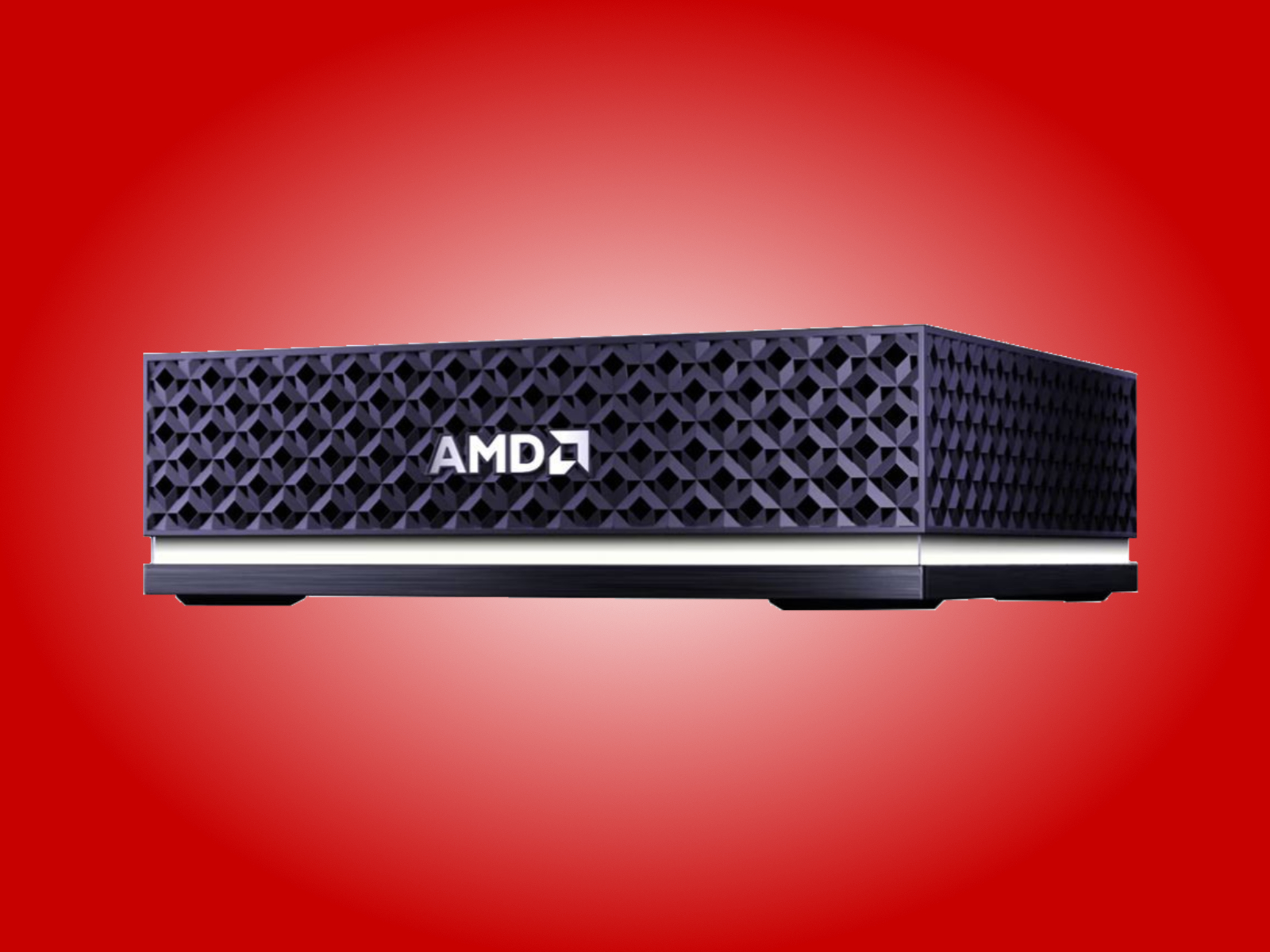
AMD releases powerful new mini-PC with 160 GB VRAM, 10 GbE and AMD Gorgon Halo
AMD has released a new mini-PC in the US. Arriving in the wake of recent Nvidia RTX Spark announcements, the new AMD Ryzen AI Halo Developer Platform hopes to surpass its predecessor with 192 GB RAM, of which 160 GB can be assigned as VRAM, and the Ryzen AI Max+ Pro 495 with the new Radeon 8065.
AMD has joined the increasing number of OEMs to launch a Gorgon Halo-backed mini-PC. For context, the new mini-PC has arrived less than a week after Asus and Dell revealed new details about their first Nvidia RTX Spark-backed mini-PCs. As with AceMagic, GMKtec and Minisforum, among others, AMD has adopted the Ryzen AI Max+ Pro 495 with the Radeon 8065S rather than lesser Gorgon Halo alternatives.
Visually, the new Ryzen AI Halo Developer Platform is unchanged from its Strix Halo-based predecessor (curr. $3,999 on Amazon). Likewise, AMD's mini-PC continues to find itself with four USB Type-C ports and 10 Gigabit Ethernet. Incidentally, AMD complements the latter with Bluetooth 5.4 and Wi-Fi 7 connectivity too.
Switching to the Gorgon Halo platform provides the Developer Platform with modest CPU performance improvements according to our benchmarks. Similarly, the Radeon 8065S is only a minor revision of the existing Radeon 8060S with the same RDNA 3.5-based 40 Compute Units, despite the name change.
The flagship SKU, the Ryzen AI Max+ PRO 495, will be inside the next generation of the new Ryzen AI Halo platform. It is a powerful 16-core 32-thread part with a base and boost clock frequency of 3.1 and 5 GHz respectively. It packs 80MB of cache memory. All this will be powered within a configurable TDP (cTDP) package of 45 to 120 watts. As always with Max APUs, the new 400 series also has a big chunk of die allocated to the on-board graphics with 40 RDNA 3.5-based CUs (compute units). The 495 will also feature an NPU built on the XDNA 2 architecture and is capable of 55 TOPS.
Aside from the 495, AMD is also introducing the Ryzen AI Max+ PRO 490 and Max+ PRO 485. These pack fewer CPU cores at 12 cores and 8 cores. The GPU CU count also comes down from 40 to 32; the NPUs are slightly less capable with 50 TOPS output though all of them still qualify for Copilot+ PCs.
Compared to the Ryzen AI Max PRO 300 series, the 400 series supports 50% higher LLM processing handling at 300 billion+ parameters (the world's first x86 CPU capable of doing so), and to help do this, memory support goes up from 128GB on the 300 series to 192GB on the 400 series. Out of the 192 Gigs, up to 160 GB can be used as VRAM, whereas previously, the 300 series could use up to 96GB as VRAM. These will be available in Q3 2026 (towards the end of this year).
With that being said, Gorgon Halo supports up to 192 GB of RAM, compared to 128 GB for Strix Halo. On the one hand, this change provides the newer Developer Platform with 50% more RAM than its predecessor. On the other hand, the mini-PC can assign up to 160 GB of this unified memory as VRAM to the Radeon 8065S.
Consequently, the latest Developer Platform has up to 66% more VRAM at its disposal, too. Unfortunately, these improvements come at a steep financial penalty. At the time of writing, AMD charges $7,299 for the new Developer Platform with 192 GB of RAM and 2 TB of storage. Please see the company's Micro Center listing for more details.
The entry-level configuration packs ample power into a tiny 150 x 150 x 43 mm chassis. This unit utilizes the Ryzen AI Max+ 395 processor, featuring 16 Zen 5 cores and an XDNA 2 NPU capable of 50 TOPS. The package includes 128 GB of LPDDR5X unified memory. Unlike its main competitor from NVIDIA, which limits users to Linux environments, AMD's system relies on x86-64 architecture. This ensures full compatibility with Windows and Linux operating systems right out of the box.
Alongside the physical workstation, the tech giant detailed its broader Ryzen AI Max 400 series processor lineup. Leading the portfolio is the flagship Ryzen AI Max+ PRO 495, featuring 16 cores capable of boosting up to 5 GHz. Under the hood, the chip packs 80 MB of cache and an upgraded NPU that reaches 55 TOPS. Graphics performance also sees a significant boost, thanks to 40 RDNA 3.5 compute units.
Memory allocation is the new processor family's standout feature. The top-tier model supports an unprecedented 192 GB of unified memory. Users can allocate up to 160 GB exclusively as VRAM. This massive capacity makes the 400 series the first x86 client processor capable of locally running AI models with over 300 billion parameters, virtually eliminating the need for external server farms for heavy machine learning tasks.
The high initial cost targets professional developers seeking long-term savings. Heavy reliance on remote AI agents often results in monthly bills of around $750. By bringing these workloads in-house, the hardware investment pays for itself in about six months. The premium package also includes pre-installed software playbooks and access to developer programs, accelerating the entire setup process.
mundophone


No comments:
Post a Comment