TECH
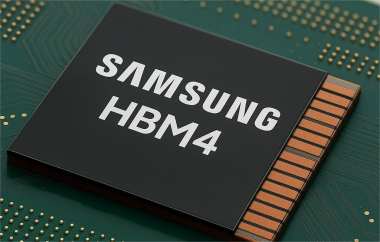
Samsung HBM4: production hits historic milestone in the artificial intelligence market
Samsung has just achieved a massive victory in the semiconductor world, overcoming an obstacle that seemed nearly impossible earlier this year. The South Korean giant has reached an 80% yield in the production of its new HBM4 memory chips—components that are crucial for the advancement of artificial intelligence.
If you follow the tech market here on Techenet, you know full well that the race for AI servers is in full swing, and Samsung has no intention of being left behind. After facing setbacks with previous generations—which even failed quality tests—this milestone reveals that the company has finally found the winning formula.
It is nothing short of impressive to see how they managed to turn things around in just six months. This level of yield not only rattles the direct competition but also ensures the manufacturer will secure a lion's share of a market that shows no signs of slowing down.
With the yield now firmly at 80%, Samsung has entered what the industry calls "golden yield." Essentially, this means the production line has become stable, predictable, and—above all—highly profitable, minimizing the manufacturing defects that plagued the initial batches shipped last February.
This turnaround was made possible by an integrated strategy that united the company's foundry, memory, and packaging divisions. The results are clear, placing Samsung in a strong position to compete head-to-head with market leader SK Hynix for supremacy in the high-bandwidth memory sector.
To grasp the magnitude of this breakthrough, one must look at the figures underpinning the manufacturer's operations. Demand for AI accelerators from brands like Nvidia, Google, and AMD has driven a surge in the need for these advanced memory chips.
Here are some of the key figures defining this historic milestone for Samsung:
-Achieved an 80% defect-free chip rate within just six months of mass production.
-Set a target of capturing a 38% global market share by the end of this year.
-It projects that HBM4 chips will account for over 60% of its memory revenue in the second half of the year.
-It is already working on the future HBM4E, targeting a 70% yield by early 2027.
With production capacity across all major suppliers already fully booked through 2027, whoever possesses the most efficient production lines will inevitably dominate the global landscape.
A promising future and projections of astronomical profits...Projections indicate that if Samsung maintains this breakneck pace of optimization, it could generate approximately $30 billion in profit from sales of these memory chips alone in 2027. This staggering figure underscores the technology's importance to our technological future.
For those who like to stay up to date on hardware revolutions, it is clear that the global reliance on artificial intelligence is set to fill the company's coffers. Samsung has not only resolved its past issues but is also positioning itself to be the primary engine behind the servers that will power the technology of the coming years.
HBM4 will boost NVIDIA's AI capabilities...While the brand is already utilizing 6th-generation (1c) 10nm DRAM, its main competitors are still using 5th-generation (1b) 10nm DRAM.
Boasting ultra-high bandwidth, Samsung's model operates at a consistent speed of 11.7 Gbps—46% faster than the current industry standard of 8 Gbps. Its peak speed can reach up to 13 Gbps, making it ideal for advanced AI workloads.
The South Korean company's memory is expected to be NVIDIA's choice for its most advanced chip, the Vera Rubin NVL72, which targets the high-performance AI infrastructure segment requiring superior speeds. The brand's secondary product line is expected to prioritize stability.
However, this supply deal with NVIDIA does not guarantee sector leadership, as the new chips are expected to cost more than general-purpose models. The market share for these chips remains uncertain, depending largely on investments by companies such as OpenAI, Google, Microsoft, Meta, and Amazon.
Expectations are that SK Hynix—which dominates the HBM space—will capture a larger share of the general-purpose market than Samsung and Micron, even if it does not secure the supply of its own HBM4 to NVIDIA. Nevertheless, experts suggest that once the yield of Samsung's 1c DRAM reaches a certain level of maturity, the tide could turn.
mundophone


No comments:
Post a Comment