TECH
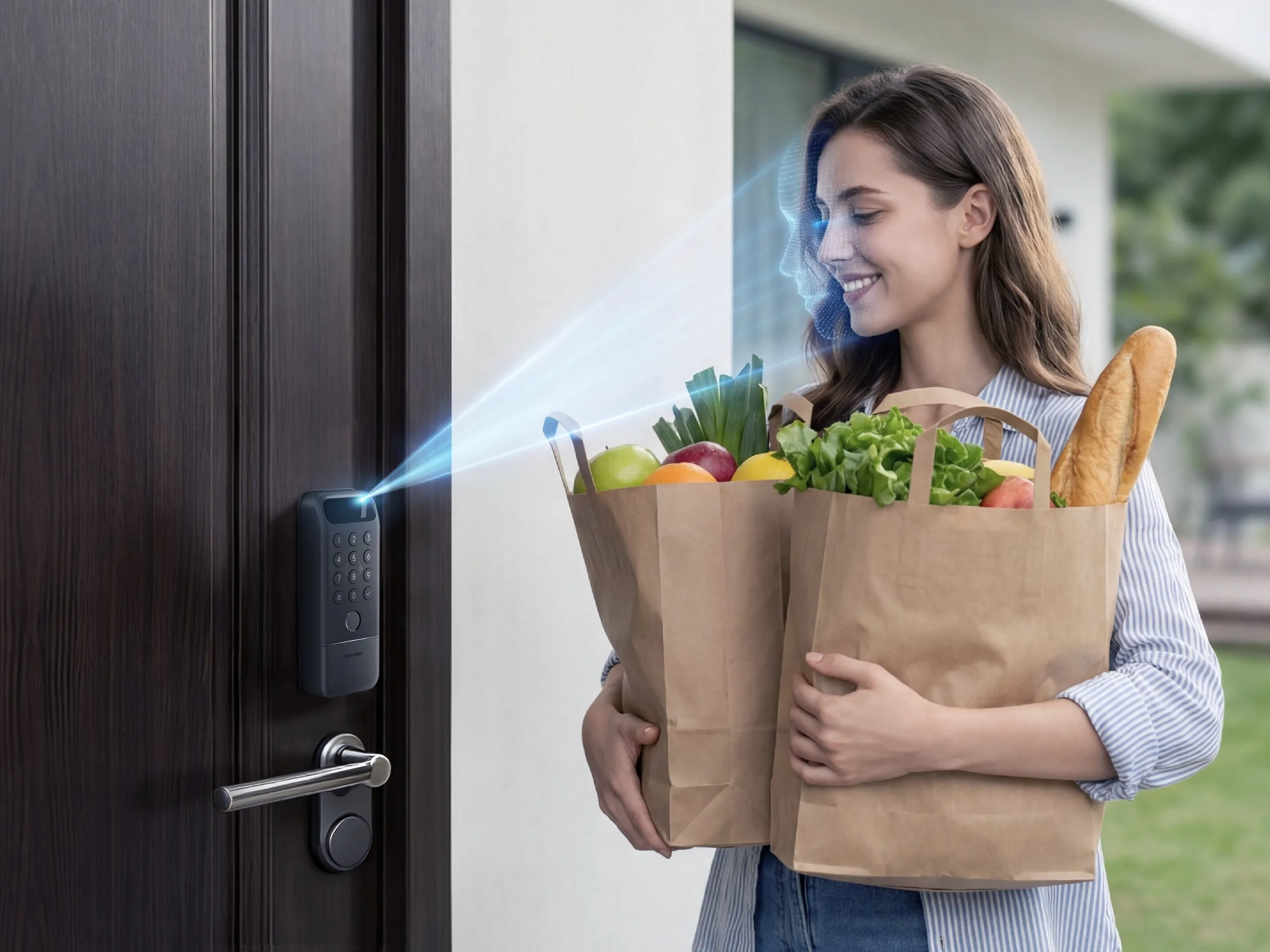
Doors closing on their own? How your AI-controlled smart home could turn against you...
Artificial intelligence is poised to play a much larger role in smart homes. While virtual assistants today answer questions or execute isolated commands, a new architecture proposed by researchers at New York University envisions AI agents capable of coordinating virtually an entire property's infrastructure: locks, cameras, lighting, sensors, alarms, air conditioning, and other connected devices.
The idea was presented in the study "Internet of Agentic Things: Networked AI Agents for Closed-Loop IoT Orchestration."
Dubbed the "Internet of Agentic Things" (IoAT), the concept describes a network of autonomous agents that do not merely receive commands but interpret goals, devise plans, activate various pieces of equipment, and adapt their decisions based on environmental changes. Instead of simply turning on a light or adjusting the temperature in response to a specific request, these systems could understand instructions like "prepare the house for the night" or "save energy without compromising security" and automatically execute dozens of coordinated actions.
The authors summarize the proposal in a sentence that helps clarify the shift: "agents do not merely observe the physical world; they participate in a closed-loop cycle of perception, reasoning, action, and adaptation."
The paper uses a smart building to illustrate how this works. Upon receiving a command to switch the building to night mode, the AI would check for the presence of people, adjust the climate control system, turn off lights in empty areas, lock doors, activate cameras and alarms, and notify the appropriate personnel if it encountered any unexpected situation—all without an operator needing to control each step individually.
Digital vulnerabilities impacting the physical world... Yet, it is precisely this autonomy that concerns researchers. According to the study, when AI agents take control of physical devices, an error is no longer just an incorrect response on a screen. A misguided decision could result in doors locking at the wrong time, security systems being triggered inappropriately, equipment operating unexpectedly, or other consequences within the physical environment. The authors state that AI is moving beyond mere text generation to directly influence the real world.
The study identifies a range of new risks for this type of infrastructure. These include attacks known as "prompt injection"—where an agent is induced to execute malicious instructions—as well as the compromise of specialized agents, the reuse of outdated information, flaws in digital twins used for decision simulation, communication delays between devices, cascading effects across connected systems, and the leakage of sensitive data such as home occupancy details, location, camera footage, and access logs.
The researchers argue that these threats necessitate a security architecture distinct from the one currently used in smart devices. Recommendations include limiting the actions each agent can perform, validating commands before they reach the equipment, restricting permissions, verifying the continued validity of old information, maintaining local security mechanisms in case cloud communication fails, and logging all AI-driven decisions for subsequent auditing.
In the authors' assessment, the "Internet of Agentic Things" represents the next stage of the Internet of Things. Rather than simply connecting devices, it connects systems capable of perceiving the environment, making decisions, taking action, and continuously learning from the results. This evolution has the potential to transform not only smart homes but also hospitals, factories, transportation networks, and energy systems.
In their conclusion, the researchers summarize this transformation by stating that "the Internet of Agentic Things reimagines the Internet of Things as an active network of ‘cyber-physical’ intelligence, rather than a passive network of devices." They add that the true breakthrough "lies not merely in adding an interface based on large language models, but in combining the distributed reasoning of agents with sensors, memory, digital twins, and feedback-based control." At the same time, the study concludes that the success of this new generation will depend on the ability to ensure that AI agents remain trustworthy, safe, and always subject to oversight mechanisms when their decisions could have effects in the physical world.
Artificial Intelligence (AI) agents are autonomous systems that read and interpret data to make decisions on your behalf. The primary danger lies in the proactive nature of these agents and in vulnerabilities such as "prompt injection," where malicious commands hidden in emails or websites can trick the AI and compromise your home's security.
Key risks associated with AI-powered smart homes:
Intrusions via context manipulation: AI agents often process external content (such as emails or messages) that is beyond your control. A hacker could send an email containing hidden instructions that cause the AI to unlock doors, adjust the temperature, or disable alarms.
Surveillance and privacy breaches: Instead of providing protection, AI can become a tool for espionage. AI-enabled listening devices and cameras can leak data regarding your daily routine, sleep habits, and the times when your home is unoccupied.
Network attacks (Botnets): If your smart home devices lack robust security, malicious actors could hack them to incorporate your home network into a botnet, using your internet connection to launch massive cyberattacks.
Automation acting against the resident: Misinterpretation of sensor data or incorrect commands can cause the AI to perform unwanted actions, such as locking residents out or shutting down essential equipment.
How to protect yourself and maintain control: To mitigate these risks and keep your home under your control, it is essential to implement several layers of defense:
Separation of permissions: Avoid granting AI agents access to critical accounts (such as your primary email or banking accounts) that could interact directly with home devices.
Strong passwords and updates: Change the default passwords on your Internet of Things (IoT) devices and keep firmware updated to patch known vulnerabilities.
Monitoring and action limits: Enable manual confirmation for critical actions, such as opening the garage door or unlocking electronic locks. Isolated networks: Create a secondary Wi-Fi network (guest network or VLAN) exclusively for your smart devices, separating them from your main computers and mobile phones.
mundophone


No comments:
Post a Comment