TECH
TUM SEACLEAR 2.0: the system that is transforming ocean cleanup
An underwater robot with artificial intelligence is already operating in complex environments, identifying debris and acting with precision. What it does underwater could change the future of the seas.
For years, ocean cleanup has been associated with visible actions: nets collecting plastic on the surface, campaigns on beaches, impactful images on social media. But the real problem is often far from sight — at the bottom of the sea. That's where tons of waste remain forgotten. Now, a new technology promises to act precisely at this critical point, where humans can hardly operate.
The proposal goes far beyond a simple robot. It is an integrated system that combines different technologies to act in a coordinated manner. While an underwater vehicle performs the collection, other units provide support on the surface and in the air.
An autonomous main vessel acts as a base of operations. Near it, an auxiliary boat helps with logistics. And, above all, an aerial drone contributes with strategic vision, mapping areas and identifying potential targets.
This set allows for something essential: understanding the environment before acting. The seabed is not a simple space. There is low visibility, unpredictable currents, and a constant mix of natural and artificial elements.
In tests conducted in port environments, the system demonstrated the ability to locate and remove various objects — from abandoned fishing nets to tires and plastic fragments. All this without causing damage to the surroundings.
This approach changes the paradigm. Instead of isolated actions, a model of continuous, coordinated, and potentially scalable operation emerges.
The artificial intelligence that decides what should be removed...The great differentiator of the technology is not only in the strength or collection capacity, but in the decision-making. The system uses artificial intelligence to distinguish what is trash from what is part of the ecosystem.
It may seem simple, but it is not. On the seabed, objects may be covered by organisms, partially buried, or confused with natural formations. Differentiating a rock from debris requires more than basic sensors.
For this, the system was trained with thousands of underwater images. Based on these references, it can recognize patterns, identify objects, and even reconstruct three-dimensional models of the environment.
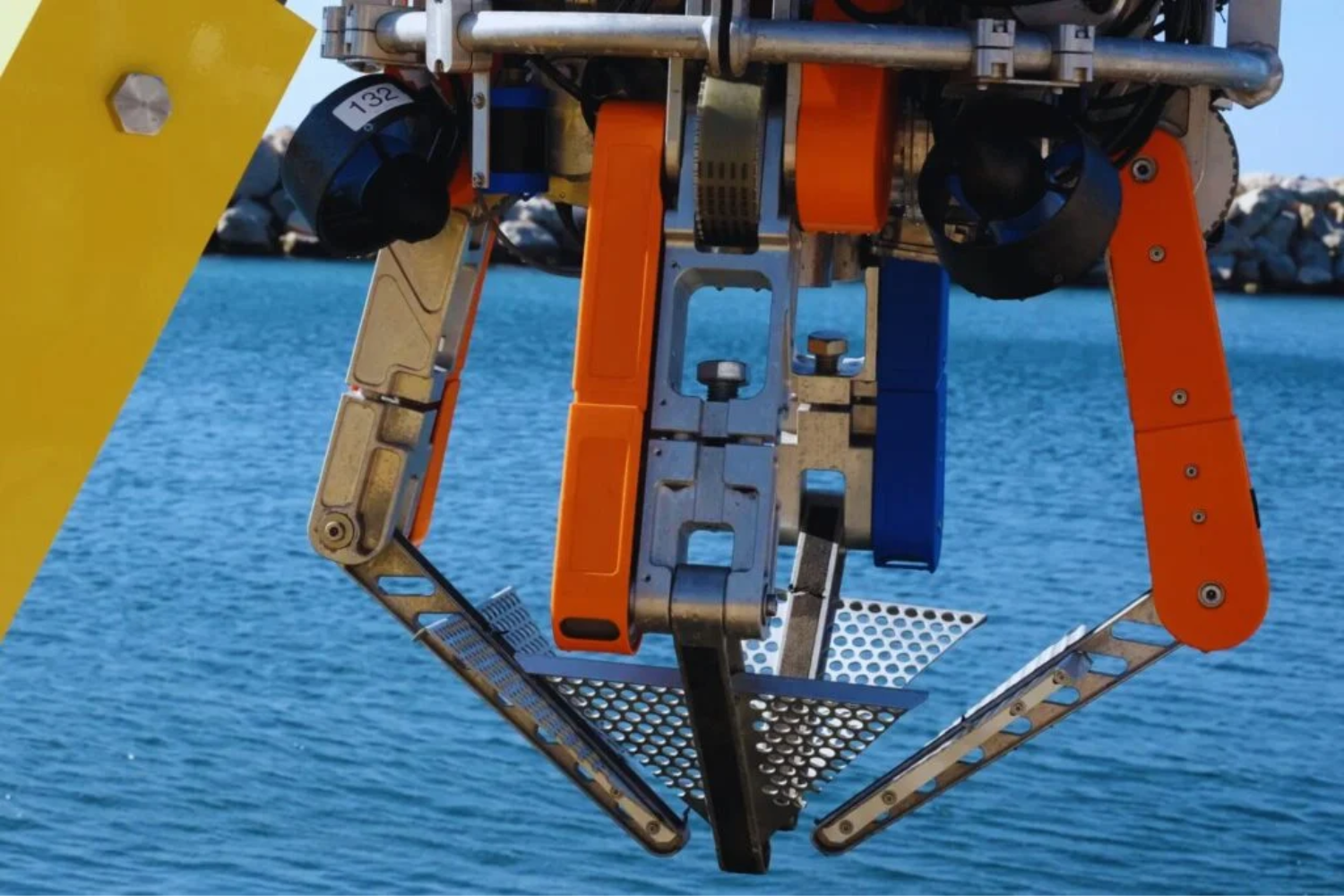
This analysis allows for precise planning of each movement. The robotic arm, equipped with multiple contact points, applies enough force to remove heavy objects, but delicately enough not to damage fragile items or disturb the surrounding marine life.
This balance is crucial. Cleaning without destroying has always been one of the greatest challenges of interventions in natural environments.
Furthermore, the robot was designed to operate stably at depth. A special flotation system reduces abrupt movements and prevents sediment suspension, maintaining visibility and protecting the local ecosystem.
Operating at depth is one of the most relevant aspects of this advancement. Beyond certain levels, human intervention becomes complex, expensive, and risky. Traditional equipment also faces limitations.
It is in this scenario that automation gains real value. The robot can operate for extended periods, maintaining precision and efficiency, without the risks associated with direct human presence.
In addition, its connection to the surface ensures a continuous supply of energy and operational control, allowing for adjustments when necessary. This creates a balance between autonomy and supervision.
The potential impact goes beyond waste collection. By enabling regular operations in previously inaccessible areas, the technology paves the way for a new form of environmental management of the oceans.
It's not just about removing existing trash, but about continuously monitoring, identifying pollution patterns, and acting preventively.
A future where the oceans can begin to recover... Despite the progress, the researchers themselves acknowledge that this technology does not solve the problem at its source. Waste production remains the main challenge.
However, it offers something that was missing: an effective tool to deal with what is already in the environment.
In a scenario where the oceans accumulate decades of pollution, solutions like this represent a concrete step. They are not immediate or definitive, but they point to a change in approach.
The answer to the title lies precisely there: the robot can do what humans cannot because it acts where we cannot go safely, precisely, and consistently.
And perhaps that is the most important point. For the first time, a real possibility has emerged of cleaning the seabed continuously and on a large scale.
If this expands, the impact could be profound. Not only in the removal of waste, but in how we think about the relationship between technology and nature.
Because, in the end, the question stops being whether we can clean the oceans... and becomes whether we will use these tools in time.
The SEACLEAR 2.0 project (Autonomous Underwater Technology for Cleaner Oceans) is a European initiative involving researchers from the Technical University of Munich (TUM), focused on developing autonomous underwater robots for the detection, classification, and collection of marine litter.
Here are the project highlights (below):
Autonomous technology: The diving robot is capable of operating autonomously to clean the seabed, having carried out operations in the port of Marseille, France.
Identification and collection: The system uses artificial intelligence and computer vision (developed at MIRMI - Munich Institute of Robotics and Machine Intelligence at TUM) to differentiate marine litter from native flora and fauna, collecting only the debris.
SEACLEAR 2.0 Project: This is a continuation that seeks to improve litter removal capacity, involving multiple European partners and TUM technology.
Partnership: The project is supported by the European Union and focuses on robotics solutions for a cleaner marine environment.
The robot stands out for its ability to operate in hard-to-reach areas and actively remove debris, contributing to marine preservation.
by mundophone


No comments:
Post a Comment