TECH
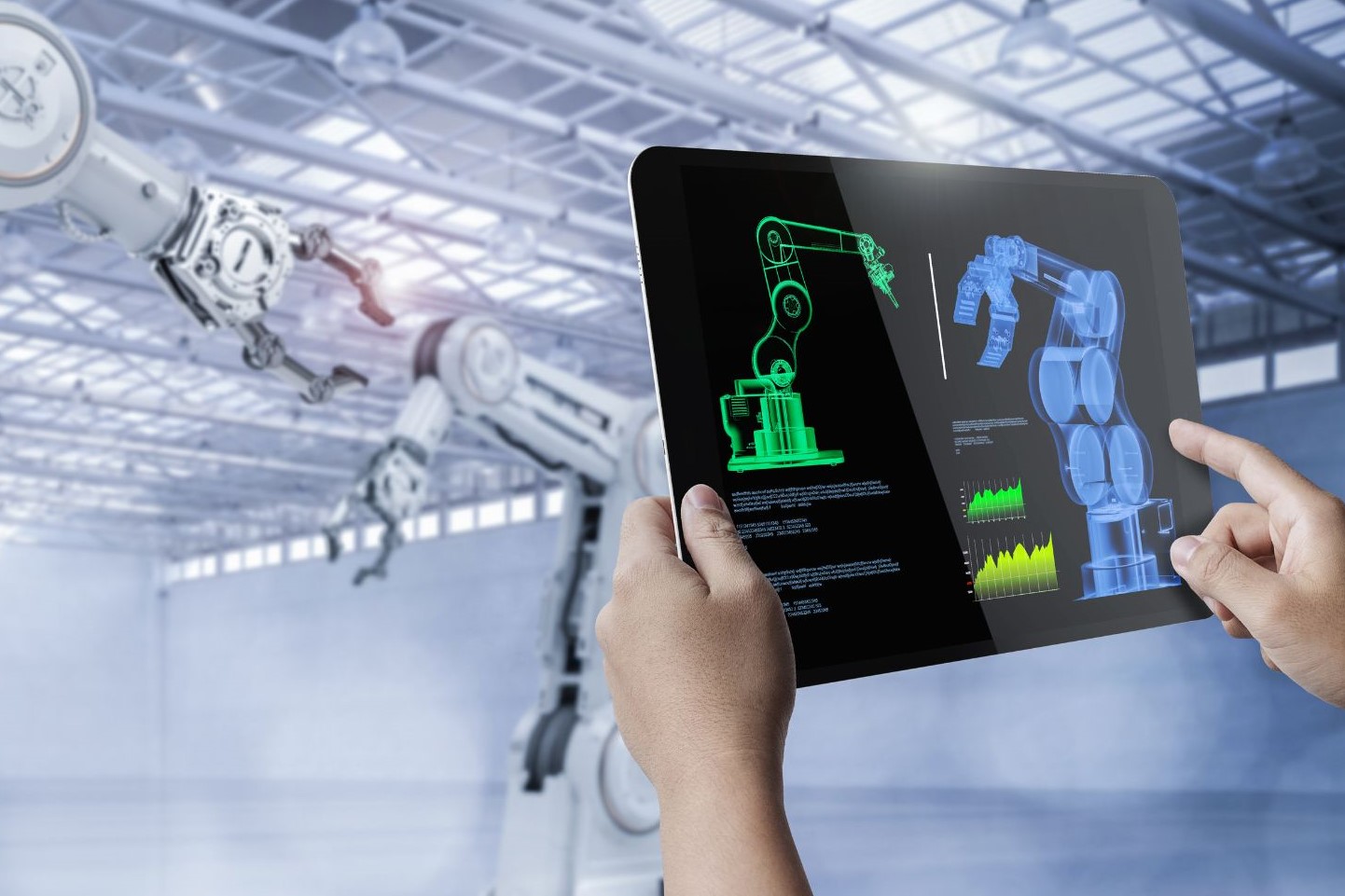
AI-driven controllers imitating the human brain could strengthen the grid
As traditional power plants are replaced by intermittent sources like solar and wind, maintaining grid stability has become a complex engineering challenge. Hussain Khan's doctoral dissertation at the University of Vaasa, Finland, introduces advanced AI-based control strategies that ensure local grids remain reliable and resilient.
Power systems are undergoing a profound transformation as fossil-based generation is gradually replaced by inverter-based renewable energy. This shift introduces inherent uncertainty and low inertia, making grid operation and voltage stability significantly more complex in AC and DC microgrids.
In his dissertation in electrical engineering, Hussain Khan addresses these challenges. By utilizing Artificial Neural Networks (ANN), Khan has developed controllers that can predict and compensate for grid changes in real time, outperforming traditional control methods.
"ANNs are inspired by the human brain, which processes information through interconnected neurons. This biomimetic approach allows the system to learn from diverse scenarios and adapt to the unpredictability of solar and wind power," says Khan.
Cost-effective solutions through sensor optimization...Traditional systems rely on multiple physical sensors to monitor voltage, current, and other parameters, adding to costs and increasing the number of potential failure points. Khan's AI-driven approach demonstrates that sophisticated software can compensate for fewer hardware components.
"By training the neural network effectively, the system can provide the same reliable results with only a single sensor instead of two. This leads to cost optimization and improves overall reliability, as there are fewer physical parts that could fail," Khan notes.
While AI-based control can improve efficiency and reduce hardware requirements, introducing intelligent controllers into critical infrastructure also raises new considerations.
"The main concern is that AI works like a black box: we can see the inputs and outputs, but not always fully explain what is happening inside. Even so, in our tests the controller performed very well and was validated rigorously in real time," notes Khan.
Khan's research supports the broader goal of building carbon-neutral energy systems in the coming decades. By improving stability and reducing hardware requirements, AI-based control could help electricity grids integrate larger shares of renewable energy in the future.

An AI-driven controller is a control system that uses artificial intelligence (machine learning, neural networks, or reinforcement learning) to optimize, adapt, and manage systems in real-time, often replacing or enhancing traditional PID controllers. These systems improve efficiency and reliability, reducing hardware dependence by predicting, rather than just reacting to, system changes
Key characteristics and benefits(below):
Adaptive learning: AI controllers learn from data, allowing systems to self-adjust to changing environments and patterns without requiring manual re-tuning.
Predictive optimization: Instead of reacting, these controllers anticipate spikes or operational changes to optimize performance and energy efficiency.
Enhanced reliability: AI can often maintain or improve system performance with fewer sensors by accurately predicting data points, reducing failure points.
Complex system management: Ideal for complex, nonlinear, or dynamic environments where traditional modeling fails
Application areas(below):
Industrial automation: Predictive maintenance and self-tuning machinery, such as that provided by AC Infinity's AI Controllers.
Renewable energy: AI maximizes efficiency in wind turbines and solar panels by adjusting to real-time, variable conditions.
Robotics: Improves stability and control for robots operating on uneven or unpredictable terrain.
Software and IT: Centralized gateways like AI Controller (shown in this demo) provide secure, compliant, and cost-effective management for AI services.
Challenges and future directions(below):
"Black Box" Problem: It can be difficult to fully explain how AI reaches certain decisions, raising validation concerns.
Data Requirement: Effective control requires accurate, high-resolution, real-time data streams.
Hybrid Approaches: Future systems are increasingly merging classical control theory with AI to balance stability with adaptability
Provided by University of Vaasa


No comments:
Post a Comment