APPLE

iPhone 17e: the great irony of having a screen manufactured by rival Samsung
You may have noticed that in the world of technology, rivalries often hide great behind-the-scenes partnerships. When you look at the eternal war between Apple and Samsung, it's easy to think they are mortal enemies who don't even exchange a "good morning." But the reality of business is very different. The recently announced iPhone 17e, the new more "accessible" offering from the Apple company, is the perfect example of this curious dynamic.
Did you know that a huge part of the screen you'll see every day if you buy this phone is actually manufactured by Samsung? That's right, the South Korean giant has once again secured the largest share of OLED panel supply for Apple.
According to a recent and quite detailed report from the specialized portal TheElec, Samsung Display (the independent division responsible for creating screens) is not playing around in this market. To give you an idea of the scale of this massive business, last year alone, the brand supplied around 11 million OLED panels for the predecessor iPhone 16e. This represented no less than 50% of the total screen volume for that model. The rest of the pie was divided between LG Display, with 7.5 million units, and the Chinese manufacturer BOE, which came in at a modest 3.5 million. The information revealed now indicates that Apple will maintain exactly the same structure and a very similar order volume for the brand new iPhone 17e.
You might ask: but doesn't Apple try to escape this extreme dependence on Samsung? The truth is that it tries, very hard. A few years ago, the Cupertino company made a huge effort to increase BOE's production share and, in this way, not put all its eggs in the basket of its biggest rival in the smartphone market. The big problem they ran into was that Apple's requirements are legendary, and the Chinese manufacturer BOE simply couldn't deliver the consistent quality demanded, failing rigorous quality control tests multiple times over the years. Without viable alternatives, Apple was forced to swallow its pride and increase the order again for Samsung, which remains arguably the largest and most innovative OLED panel manufacturer on the planet.
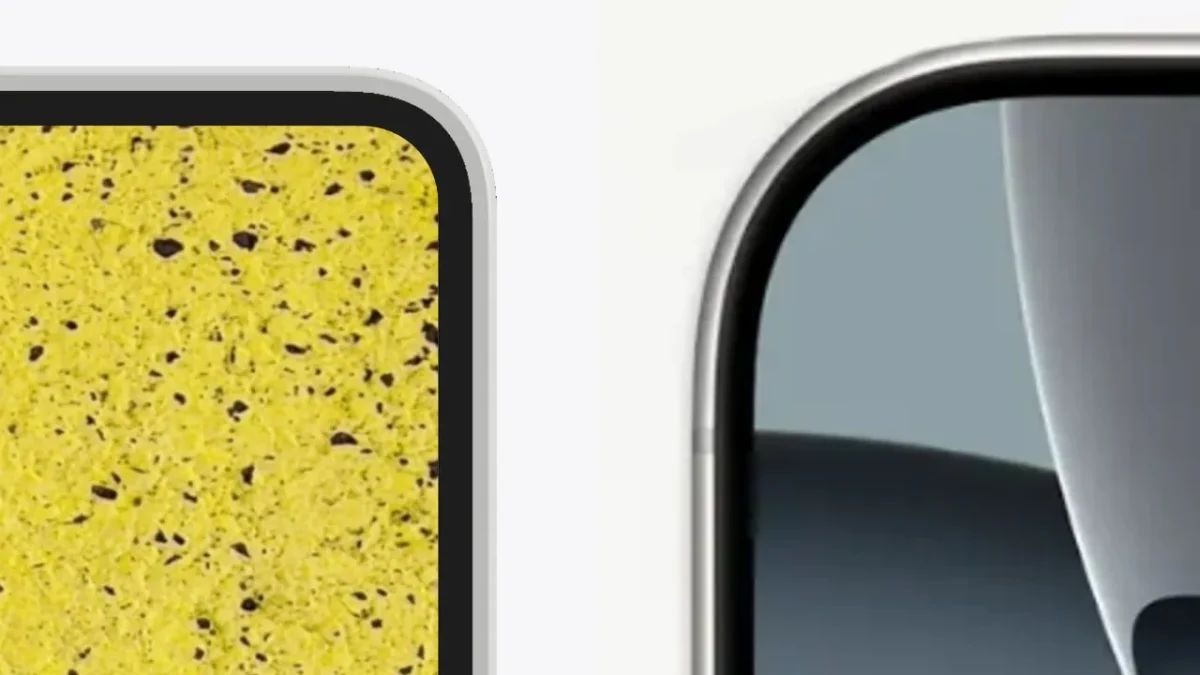
What does the iPhone 17e's screen and internals offer? But what does the iPhone 17e's screen actually offer in practice? It's a 6.1-inch OLED panel that guarantees incredibly vibrant colors and absolute blacks, achieving a peak brightness of 1,200 nits. However, there's a technical detail that has generated immense controversy within the community: the refresh rate remains stubbornly stuck at the old 60Hz. At a time when almost all competing Android phones already offer 120Hz for immaculate fluidity when scrolling or playing games, Apple continues to reserve this feature (which it calls ProMotion) exclusively for its most expensive Pro line models.
To compensate for this visual limitation, the phone comes "armed" with tremendous processing power. Inside, it features the powerful A19 processor built with 3-nanometer technology, 8 GB of RAM, and an excellent photographic system that includes a 48 MP main camera equipped with optical image stabilization (OIS) and a 12 MP front camera for your selfies.
The great duel: iPhone 17e vs. Galaxy A56...If you're actively doing the math, it's totally impossible not to compare the new iPhone 17e with its main direct rival and screen "cousin": the Samsung Galaxy A56. In the United States, the basic 256GB version of the iPhone 17e has an official price of US$599, making it about US$50 more expensive than the equivalent version of the Galaxy A56. Which one should you choose? It all depends strictly on what you value most in your daily life.
If you're looking for absurdly fast and long-lasting performance (thanks to the superior A19 chip), top-notch quality in main and face photos, vital access to the satellite emergency SOS system, and the convenience of wireless charging, the iPhone is clearly the way to go. On the other hand, if you can't do without a much smoother and slightly larger screen, if you love taking group photos with a dedicated ultra-wide-angle camera, if you need a giant battery that never lets you down, and if you prefer faster charging, the Galaxy A56 ends up delivering more value in these specific aspects.
The final decision is in your hands and your wallet, but it's somewhat ironic to know that, whichever operating system you choose, Samsung invariably ends up making a little bit of your money.
mundophone


No comments:
Post a Comment