TECH
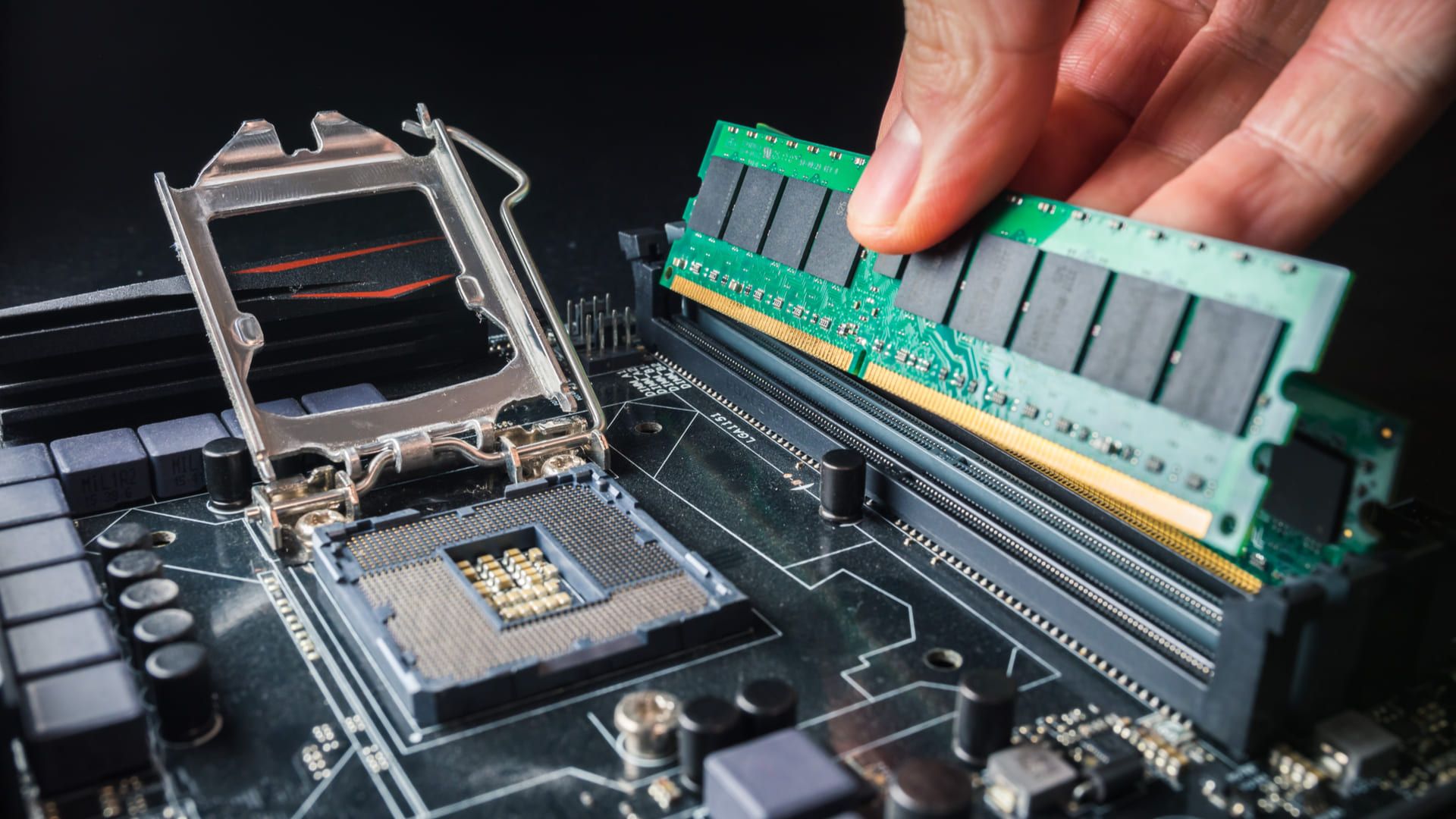
Why DDR4 memory is the smartest choice for your PC in 2026
If we go back to 2023, the narrative in the tech world was clear: DDR4 was on its way out, and DDR5 was the inevitable path for anyone who wanted a system minimally prepared for the future. At the time, many enthusiasts—myself included—invested in new platforms, such as AMD's AM5, believing that the transition would be quick and that prices would fall as production increased. However, the scenario we find ourselves in today, in 2026, is radically different and, in a way, ironic.
The technological evolution, which should have made the new standard accessible, followed an inverse path. Instead of a price drop, we saw an explosion in the costs of DDR5 memory, while the "old" DDR4 consolidated itself as the only viable alternative for the average user's budget. Building a PC with next-generation components became a prohibitive luxury, elevating DDR4 to the status of queen of cost-effectiveness.
The Impact of Artificial Intelligence on Your Hardware...You might question why a technology that's only been on the market for five years is gaining traction again. The answer lies not in the home consumer market, but in the gigantic data centers dedicated to Artificial Intelligence (AI). The AI "boom" in 2025 has shifted the priorities of semiconductor factories. These data centers devour all the bandwidth and high-performance memory they can find, focusing almost exclusively on the DDR5 standard and HBM (High Bandwidth Memory).
For manufacturers, the choice is purely economic: profit margins selling to AI companies are immensely higher than those obtained in the gaming or personal productivity markets. This has resulted in a massive diversion of production, leaving ordinary consumers with DDR5 memory kits costing absurd amounts, often between 400 and 500 euros.
In this logistical chaos, DDR4 has become a safe haven. Since it is produced in older, more mature manufacturing nodes—which are not suitable for next-generation AI accelerators—its stock remains stable and prices remain rational. The future they promised us has literally been diverted to the backstage of AI servers.
Despite the theoretical speed difference, the practical truth in the gaming field favors staying with the previous standard. Currently, most gamers are migrating to resolutions of 1440p or higher. In these scenarios, the main effort falls on the graphics card (GPU) and not so much on the processor or the system's RAM.
When you play at high resolutions and use technologies such as frame generation or intelligent upscaling, the performance difference between a 3600MHz DDR4 memory and a top-of-the-line DDR5 is minimal. Recent tests show that this variation is often between 1% and 3%. This is where you should ask the crucial question: does it make sense to pay a 400% premium in price to get only a 2% gain in the smoothness of your game?
Modern video cards can compensate for almost all system bandwidth limitations, making DDR4 memory a component that, far from being a bottleneck, performs its function admirably for a fraction of the cost.
The maturity of the ecosystem and the used market...Another determining factor for the current success of DDR4 is the maturity of the platform. After years on the market, all compatibility issues and BIOS errors have been resolved. When you buy a DDR4 motherboard today, you are acquiring an extremely reliable product.
In addition, the second-hand market is flooded with high-quality components. Large companies are upgrading their computer parks, releasing DDR4 processors and memory at bargain prices. You can easily find powerful processors from the late AM4 platform era that, combined with a good amount of cheap RAM, offer a premium user experience that rivals newer, more expensive systems.
In 2026, being an informed user means ignoring aggressive marketing of new features and looking at real performance and price data. DDR4 isn't just a nostalgic choice; it's the only sensible decision for those who value their money without sacrificing quality. If you're thinking about upgrading your PC this year, take a close look at what you already know. Sometimes, taking a step back in generation is the biggest leap forward you can make for your wallet.
DDR4 remains the smartest, most budget-friendly choice for PCs in 2026, saving $200–$400 in build costs while offering mature, reliable, and high-performance, low-latency, and high-capacity options for gaming and office work. It provides a superior, cost-effective, and efficient way to upgrade older systems.
Why DDR4 is the smartest choice in 2026(below):
Significant cost savings: DDR4 is considerably cheaper than DDR5, helping to bypass high memory prices in a tight market, potentially saving you over $200 on a full build.
Mature & reliable technology: With over a decade of maturity, DDR4 offers excellent stability, avoiding the high costs, high temperatures, and potential initial BIOS headaches associated with newer platforms.
Solid performance: High-quality DDR4 (e.g., 3200MHz/3600MHz) still provides excellent performance, and with low latency, it often outperforms or matches budget-level DDR5.
Excellent upgrade path: Perfect for upgrading existing systems (AM4/LGA1700), allowing users to boost performance in older, yet still capable, rigs without replacing the entire machine.
Reduced Total Cost of Ownership: By opting for cheaper DDR4 kits, you can reallocate funds towards a better GPU or CPU, providing a more balanced, high-performance system for the price.
Key considerations: While DDR4 offers great value, it is near the end of its life cycle, which limits future scalability compared to DDR5. However, for the majority of users, the performance and price benefits make it an exceptionally practical choice in 2026.
by mundophone




No comments:
Post a Comment