DIGITAL LIFE
Big tech's data center: boon or burden for society?
Boom goes Big Tech data centres in the hearts of Manitoba Premier Wab Kinew and American President Donald Trump. The dynamical duo of data centre supporters is on par with prominent detractors, Democratic Socialist Senator Bernie Sanders of Vermont and Conservative Republican Governor Ron DeSantis of Florida. Sanders and DeSantis, polar opposites on the political spectrum, agree on nearly nothing. But both oppose Big Tech’s un-checked expansion of data centers championed by Trump accelerating construction of data centres with minimal scrutiny.
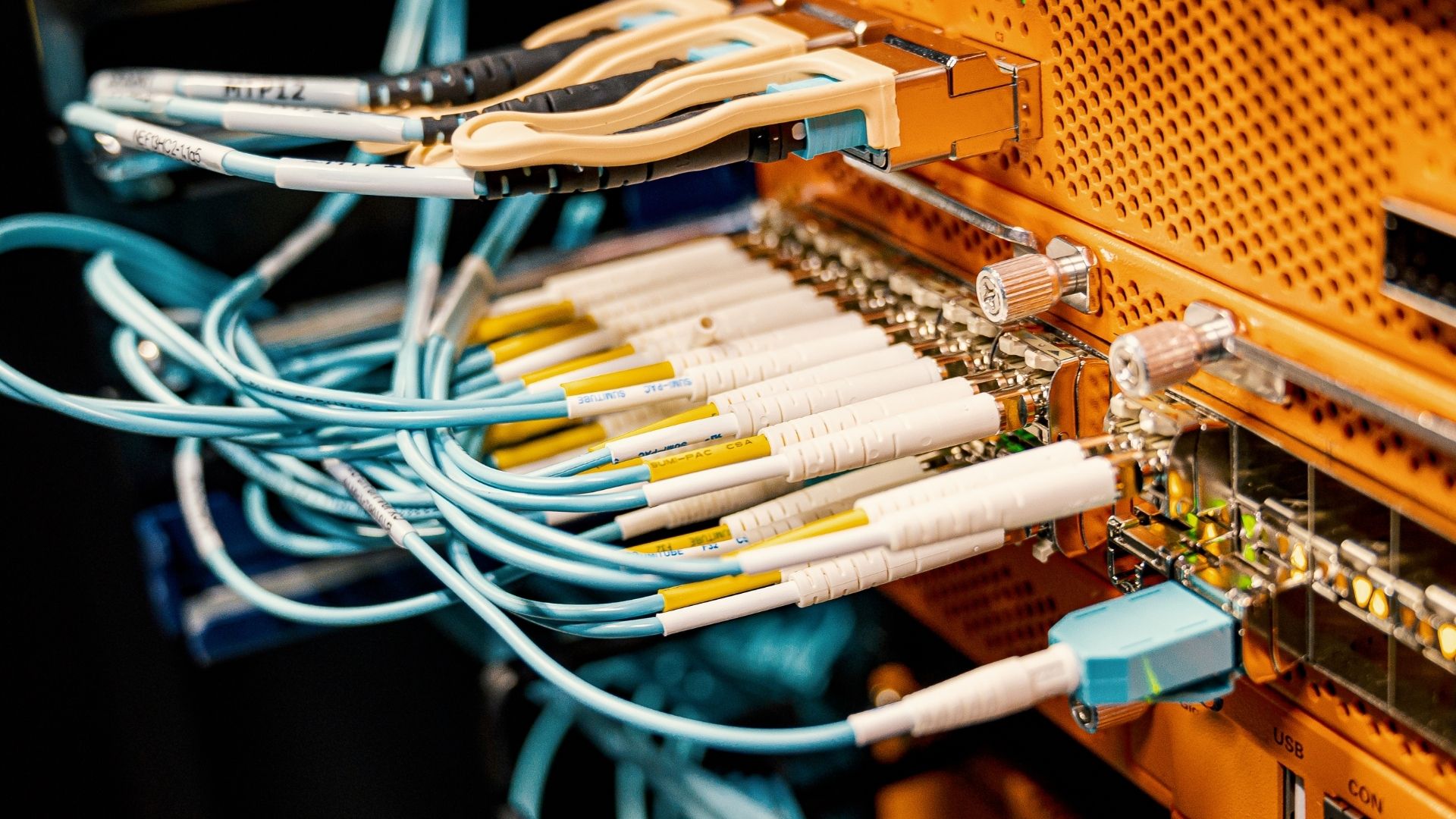
Acres of sprawling stand-alone windowless buildings packed with silicon chips stacked on server racks chilled by internal building cooling systems. These are data centres, the foundation of big tech’s scaling up of the artificial intelligence industry, consuming electricity, water and land to rival small cities.
Early 2000’s data centres were ‘micro’: size of a shipping container or smaller, often co-located with another use in a building. Data centres are now often stand-alone buildings sized as either ‘enterprise – 5,000 to 50,000 square feet’ or ‘hyperscale – greater than 1,000,000 square feet’. Winnipeg Richardson International Airport terminal is approximately 550,000 sq. ft. Several data centre buildings sited together comprise a data centre campus driving cloud computing and AI research and computational resources.
Big Tech’s data centres site selection is large, flat, stable, cleared lands in rural areas. Places such as Port Washington, Wisconsin (pop. 12,500), Mount Pleasant, Wisconsin (pop. 28,184), Council Bluffs, Iowa (pop. 62,665) and Cedar Rapids, Iowa (pop. 137, 710). Agriculture lands are often re-designated and re-zoned ‘industrial’ after local government public hearings to consider the land-use planning prior to permitting building construction.
Port Washington, WI data centre broke ground in December 2025 for phase 1 construction of four data center buildings on 672 acres of former farmland in a total project land scope of 2,000 acres. Waverley West in southwest Winnipeg is 2,500 acres. This new Port Washington data centre plus data centres being built in Mount Pleasant, WI will require the same energy to power 4.3 million homes in Wisconsin, a state which has only 2.8 million homes.
Data centres require a persistent supply of electric power running servers, networking equipment and cooling systems. Complete islanding (no grid connection) of data centres is not possible. A hyperscale data center requiring 960 megawatts is plugged directly into the Susquehanna nuclear plant in eastern Pennsylvania. Manitoba’s newest hydroelectric generating station, Keeyask Generating Station completed in 2022 at a cost $8.7 billion CAD, only generates 695 megawatts.
Voracious appetites for electricity and land are matched by data centres insatiable thirst quenched by freshwater. Freshwater cooling systems prevent equipment damage by managing the high heat generated by equipment and maintaining a constant humidity to prevent static electricity discharges. An enterprise sized data center consumes around 110 million gallons of water per year, equivalent to the annual freshwater usage of approximately 1,000 households. A hyperscale data centre of 2.5–2.9 million square feet such as the one in Council Bluffs, Iowa uses 1.3 billion gallons of freshwater annually, equivalent to 50,000 households.
Data centre proponents Kinew, Trump and Big Tech point out several benefits: digital sovereignty, increased municipal revenues, and construction job creation. A hyperscale data centre in Cedar Rapids, Iowa currently under construction will take 3-5 years with 3,000 tradespersons on-site at any given time while paying $8.5 million in building permitting fees with a minimum capital investment by the proponent of $576 million. The local government secured a community betterment agreement with the company making annual payments of $400,000 per data centre building for 15 years, maximum of $6 million per data centre campus and total of $36 million.
Skeptics of data centres such as environmentalists, consumer groups, labour unions and local residents, point out several concerns. Loss of productive agricultural lands. Lack of transparency and accountability of operations and government agreements. Permanent employment positions, post-construction, within data centres is small compared to construction, one job for every 30 construction jobs. Massive consumption of freshwater sourced from surface waters and ground aquifers depleting local supplies.
Most significant concern are the higher energy costs for households. University of Michigan 2025 study found utility companies ramp up the electric grid infrastructure to increase power generation and transmission to meet the enormous new electric power demands of data centres. These infrastructure costs have been passed down to utility customers forced to pay increasingly higher electricity rates. A 2024 independent study commissioned by the Commonwealth of Virginia showed that by 2040, Virginian residents will be paying up to $37 more per month on energy because of data centres.
Average people are putting cost of living at the top of their list of concerns, every increase in the household costs of food, shelter and energy matters. Manitoba Hydro electricity rates rose by 4.0 percent on January 1, 2026 due to severe drought and debt. The Crown Corporation carries billons in debt now and is expected to borrow billons more over the next decade.
Sanders has called for a national moratorium on the construction of data centers in America. Over 230 organizations from across 50 states have called on the American Congress to impose a national moratorium on data center siting and construction. Over 40 Republican and Democratic states have passed nearly 150 laws aiming to regulate AI. DeSantis in Florida is championing a bill to protect local communities’ right to block data center construction.
Hospitable locations with suitable lands, power and water for data centres are diminishing quickly around the USA. Big Tech is looking north and Premier Wab Kinew has opened his heart to welcome data centres to Manitoba. "You'll see servers and data centres in Manitoba in the future," Kinew told reporters last October after releasing a report from data experts supporting growing data centres in Manitoba. The Premier is channelling his inner Trump, failing at providing any details on how his government’s support for Big Tech growing data centres will not prevent average Manitobans from going bust.
Author: John Wintrup is a lifelong Winnipegger, urbanist, globetrotting city explorer, Harvard student, and professional planner with a M.Sc. Planning degree and holder of multiple planning accreditations in both Canada and the United States.




No comments:
Post a Comment