DIGITAL LIFE
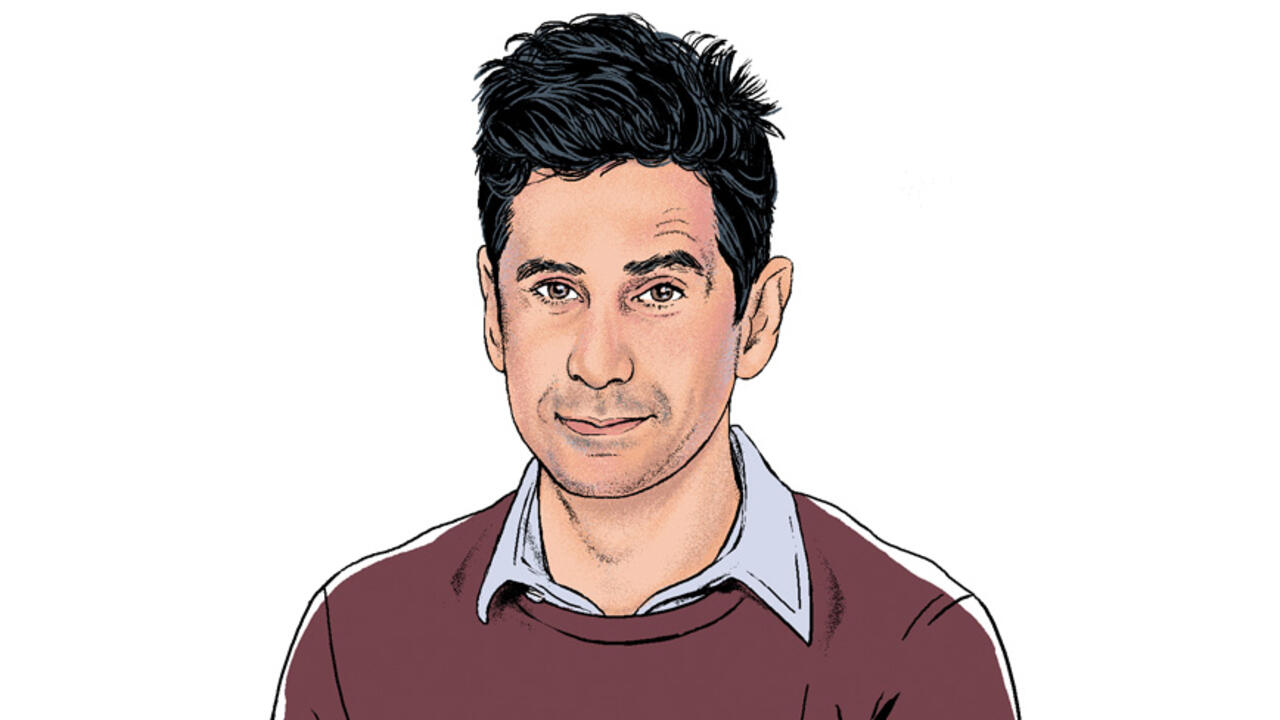
Fara Dabhoiwala: "The idea that big tech cares about freedom of expression is a fallacy"...
What is the biggest joke of the 21st century? Strictly speaking, I don't know what the biggest one is. But one of them is undoubtedly not funny: it is the "idea" that big tech companies — Google, Meta (Facebook, Instagram), X, etc. — "defend" freedom of expression.
In practice, big tech companies only defend one thing: their freedom to do business at any cost. If capital is reproducing itself, even with the dissemination of the most outrageous atrocities, entrepreneurs of the caliber of Elon Musk and Mark Zuckerberg will not care at all.
Therefore, the decision of the Supreme Federal Court, which now penalizes big tech companies — for criminal posts on their networks, making them jointly liable — is fair and will end up becoming a model for other countries.
The Supreme Court has moved forward, given the inertia of Congress. Under pressure from transnational corporations and the political right, he neglected the issue.
Fara Dabhoiwala published the book "What is Freedom of Expression? A History of a Dangerous Idea" last August. This is the subject of Lúcia Guimarães' text.
It is crucial to "understand that the authoritarian wave" of the 21st century "is not unprecedented and cannot be confronted without regulation of the digital ecosystem," Dabhoiwala posits. Total libertarians don't know what they're talking about, the scholar suggests.
Holding Meta, Google, X, Telegram — among other big tech companies — accountable is crucial to curbing excesses on social media.
Individual posts — which become collective (even movements), with the encouragement and ease of access — should not be attributed, in legal terms, only to those directly responsible, but also to those who disseminate, multiply, and profit (a lot of) money from them.
Dabhoiwala points out that "language is important, and a slogan like 'stifle innovation' is the code language of companies."
The Princeton PhD says that the platforms have their regulatory systems. "They are censorship platforms. Their algorithms are always amplifying one thing, downgrading another. They are active curators."
"What doesn't work is expecting digital platforms to self-regulate." Meta, Google, X, Telegram, TikTok profit handsomely from the chaos that they — if not directly create — encourage, manipulate, and perpetuate.
The punishment of comedian Léo Lins by the Brazilian Justice system did not please Dabhoiwala. Not because he approves of what the Brazilian artist says, but because "the platforms that amplified his stand-up, as hateful as it is mediocre, remain unpunished."
Léo Lins(Brazilian comedian Léo Lins was sentenced by the Brazilian courts to 8 years and 3 months in prison last year for spreading content against minorities and vulnerable groups through jokes)
The scholar from the United States—currently in Cambridge—read carefully "about the attempts to intimidate Alexandre de Moraes," a minister of the Supreme Federal Court. "The interests of the owners of most mass media are not aligned with those of the public," he emphasizes.
"But the aggravating factor now is that the companies are transnational and grew after, at the end of the 20th century, there was a libertarian radicalization of the notion of freedom of expression. It is an idea that is out of step with the rest of the world," adds the researcher.
Dabhoiwala suggests that it is necessary to escape the trap of platitudes such as "the solution to bad ideas is more freedom of expression." It's a kind of youthful foolishness.
''Fateful paragraph of the First Amendment''...In early 18th-century United Kingdom, the introduction of the telegraph and the explosion of print media created an unprecedented audience for journalism and increased pressure for free access to information, but this was not an organic mobilization. From the beginning, the claim for the right to speak was associated with political opposition, with specific interests embedded in an industry that was born corrupt, writes the author.
Enter two ambitious British journalists, whose ideas continue to impact billionaires like Musk and his libertarian "tech bros." Between 1720 and 1723, Thomas Gordon and John Trenchard published, under a pseudonym, the "Cato Letters," a reference to the incorruptible Roman politician who opposed the tyrannical Emperor Julius Caesar.
The compilation of essays, Dabhoiwala recalls, "became one of the most influential Anglo-American works of the 18th century. Its general political theory offered no original ideas. It mainly provided easily digestible panaceas on personal liberty, religious freedom, the limits of government, and the nature of knowledge."
The duo's ideas inspired American citizens who fought for independence and culminated in the fateful paragraph of the First Amendment, which Dabhoiwala describes as crude and idiosyncratic. But, as the author reveals in a historical scoop, the alternative version of the amendment, drafted by their revolutionary brethren from France, soon reached the ears of the founders of the Republic, gathered in Philadelphia.
In "What Is Free Speech? A History of a Dangerous Idea," Fara Dabhoiwala examines three centuries of a right commonly attributed to the founding of the American Republic, but which was, in fact, first disseminated across the Atlantic.
The professor states that the idea for "What Is Free Speech?" arose from experiences promoting his previous book, which had passages censored in the Chinese edition and at least one lecture canceled in the United Kingdom by an institution with religious ties.
Dabhoiwala spent the following decade researching for the new book, which ends with a warning about the importance of understanding that the current authoritarian wave is not unprecedented and cannot be confronted without regulation of the digital ecosystem.
Fara Dabhoiwala:The British-American of Parsi descent is a professor in the History Department at Princeton University and author of the acclaimed "The Origins of Sex: A History of the First Sexual Revolution"
https://dabhoiwala.com/what-is-free-speech


No comments:
Post a Comment