DIGITAL LIFE
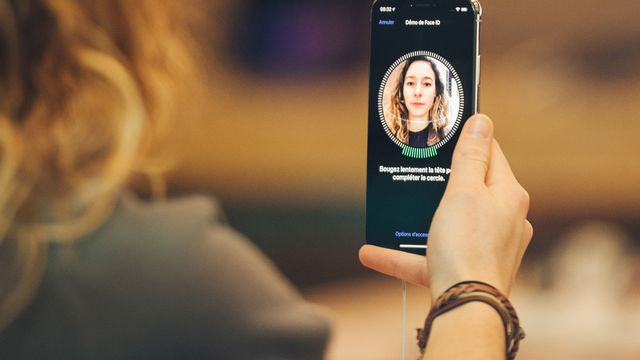
Combating the proliferation of bots, deepfakes and digital fraud through a proof of humanity. This is the goal of World, a decentralized open-source protocol. The solution was designed to face the challenges brought by technologies such as artificial intelligence and generate digital security and trust without compromising the privacy and autonomy of each individual.
“With the rapid advancement of technology, society faces a fundamental question: how will humans and AI coexist productively and differentiate themselves from each other? In this context, proof of humanity technologies are essential to distinguish humans from robots and generate trust online”, says Rodrigo Tozzi, head of operations at Tools for Humanity, a partner company of World Brazil.
Available in more than 20 countries to date, World brings together more than 11 million people worldwide who have already had their humanity verified. In South America alone, 6.7 million people have undergone humanity verification to receive their World ID in countries such as Brazil, Argentina, Chile and Mexico. What is World?...World is a decentralized, open-source protocol that provides a global network of real humans, distinguishing humans from online bots.
The idea is that, in the future, this network can be used to prove humanity online in situations where an AI could impersonate a person, whether when logging into a social network or in a videoconference job interview, for example.
The World ecosystem is composed of the following pillars:
-World App: an application that provides simple and easy access to the World network. The app can be used to store the World ID, use digital assets and access an ecosystem of mini apps.
-Orb: a state-of-the-art device, similar to a high-resolution camera, that verifies the humanity and uniqueness of each person, through a code obtained through a high-resolution photograph of the eye.
-World ID: a digital credential that securely and anonymously proves that the individual is a unique human being online, and not a bot. World ID verifies humanity and uniqueness, not identity.
How World ID works...The World ID concept draws attention to the “iris scanning” factor. To verify a person’s humanity, World uses a state-of-the-art device, similar to a high-resolution camera, the Orb, which converts the iris image into a unique numeric code and generates an anonymous verified World ID.
While technologies such as fingerprinting, on a large scale, can present false positives, iris biometrics are much more accurate, making them the ideal solution for proving human uniqueness on a large scale and without compromising user privacy, since biometric data is never stored by the protocol.
The company explains that the original eye images are encrypted end-to-end, sent to the person’s phone and immediately deleted from Orb. This gives the person the choice and control over their images, and can delete them at any time. Is World safe?...World uses PET (Privacy Enhancing Technologies) technologies.
Among them is Anonymized Multiparty Computing (AMPC) technology, which anonymizes the iris code by converting it into several other secret codes and distributing these codes among servers of trusted universities and institutions, ensuring security and making tracking or leaking attempts impossible.
According to World, personal data, including information processed by Orb, is not stored by the protocol, ensuring that neither World nor any third party has access to any sensitive data. “In addition, the World App has Face Auth, a proprietary facial authentication technology that allows only the World ID holder to access the application. If the cell phone is lost or stolen, no one other than the holder can access the World App”, highlights the company.
“World is not a company, but rather a decentralized and open source protocol; that is, it does not have an owner and any person or company can collaborate and develop from World. For comparison purposes, think of World as the internet.
The internet, like World, is a protocol and has no owner. Tools for Humanity is a startup that collaborates with World and develops the technology that supports the protocol, such as Orbs and the World App”, explains Tozzi.
The importance of humanity verification...According to the Bad Bot 2024 report, developed by Imperva, almost half of all global online traffic in 2023 was generated by non-humans.
The number represents the highest rate in more than ten years. Meanwhile, a study by Samsub indicates that, in Brazil, the growth of deepfakes was 830% between 2022 and 2023.
According to a study conducted by Tools for Humanity and Ipsos with 1,200 people, 93% of those interviewed said they had been victims of identity theft or knew someone who had. The survey also shows that 70% of the public is somewhat concerned about whether the content they are seeing on the internet is generated by a real human or an online bot.
"AI is reshaping our world, creating both incredible opportunities and challenges," explains Tozzi. "Privacy and security are at the heart of the technologies we are building to ensure greater trust and integrity online," he concludes.
https://world.org/pt-br/world-id
by mundophone




No comments:
Post a Comment