TECH
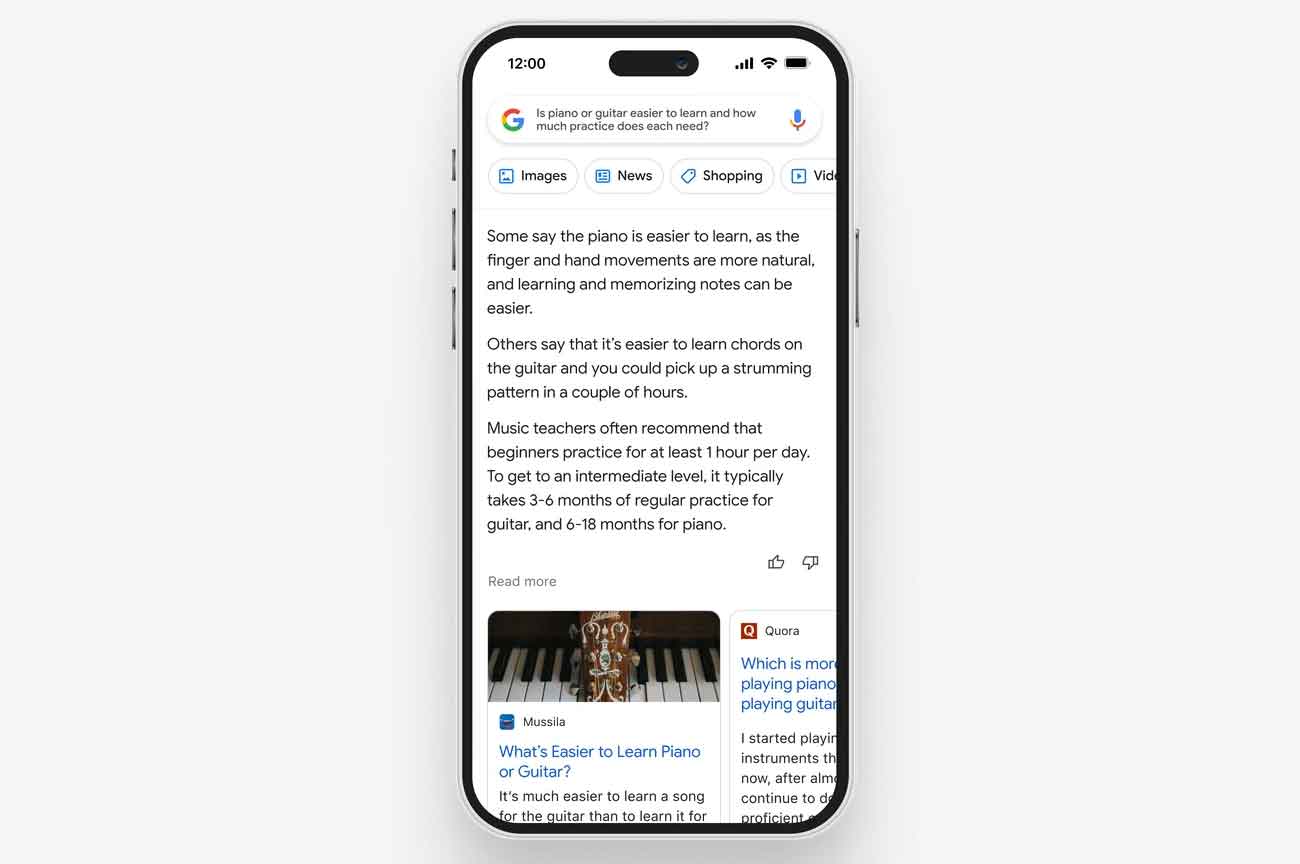
Bard, Google's answer to ChatGPT
With the Google Bard came the most anticipated tech announcement of recent months. Since the arrival of ChatGPT and, above all, since Microsoft's plans with OpenAI to integrate the chatbot into Microsoft Bing. Google's hegemony with its web search engine may be threatened, for the first time in a long time, for not being the first to offer a technological innovation that aims to revolutionize and reinvent information searchers on the Internet.
As soon as the first rumors and leaks about the collaboration between Microsoft and OpenAI appeared, Google wanted to make a move and announced that in a few months we would have news about it, which made us think of Google I/O 2023 as the platform for the announcement of its advances related to artificial intelligence. However, it seems that plans for Bing are moving quite quickly, to the point that some users have already managed to test it, so waiting until May does not seem like a good idea.
This is how they must have thought in the search engine company's offices, so we can imagine that a large team of engineers must have joined those who were already dedicated exclusively to it and, with a period of days, Google announced last week an event for next Wednesday. All signs pointed, therefore, that the day after tomorrow we would finally know the company's plans to compete with the OpenAI chabot.
However, the wait was even shorter, so much so that it was over. And as we can read in The keyword, the search engine's official blog, Google has announced Bard, its chatbot based on artificial intelligence with which it will compete with ChatGPT. We can get an idea of the fundamental importance of this announcement seeing that the said publication is signed by Sundar PichaiCEO of the company, who also told investors a few days ago that there would be news in this regard soon.
Not much is revealed about Bard in the aforementioned publication, we will have to wait for Wednesday's event so, with almost total probability, we can expand the information about it. However, there are some important points in this text that we will analyze below.
The first thing is that, as expected, Bard will use LaMDA, (Language Model for Dialogue Applications), a platform designed by the company for this purpose and which we already knew, as its engineers have been working on it for two years. Thus, we can assume that Bard will have a high level of maturity, technologically speaking.
On the approach of this chatbot, Sundar Pichai says that «Bard seeks to combine the breadth of the world's knowledge with the power, intelligence and creativity of our great language models. […] Draws on information from the web to provide fresh, high-quality answers«. The concept of “fresh” is particularly important here, as it can signal that its refresh rate, i.e., the frequency with which the model is “retrained” with more current posts, may be higher than that of the OpenIA chatbot, which only recently, a few weeks ago, you “learned” that Windows 11 already exists.
This one has a head and a tail. Obviously, if the model is fed daily with recent information, its responses will be better adapted to the current context, which will make it more useful as a tool integrated with an information navigator. However, the selection process may have to be much more relaxed, opening the door to fearful biases that unfortunately were quite common in the past when there was no editing process to avoid them.
We can also read that, unlike the public beta model used by OpenAI, Bard will not open to all users right from the start. Instead, Google has chosen to release a first scaled-down version of Bard, which will be shared exclusively with a pre-selected group of users. “We will combine external feedback with our own internal testing to ensure Bard's responses meet a high level of quality, security and robustness against real-world data,” Pichai said. «We are excited about this testing phase, which will help us to continue learning and improving the quality and speed of Bard.«.
So while the announcement has already been made and the unveiling is imminent, it looks like we'll still have to wait until we can test Bard for ourselves. Now, with Microsoft close to opening up its testing program for the new Bing, Google he knows he must move in the short term if he wants to avoid curiosity leading many users to start testing Microsoft's search engine. So we can understand that the deadlines will be tremendously tight.
The title of the post, “An important next step in our AI journey,” also suggests that Bard is just one step on a road that promises to be a long one. Pichai notes that as user search requests become more complex and nuanced, the response "you'll see AI-powered capabilities in search that pull complex, multi-perspective information into easy-to-digest formats so you can understand quickly see the big picture and learn more'.
This is very interesting, as it indicates that Bard (and/or his successors) will be able to carry out complex analyses, based on multiple sources (which may not coincide with each other) and will be able to draw conclusions and present them to the user. However, at this point it must be fundamental for the chatbot to clearly identify, for the user, the sources used for said process. Otherwise, doubts can overwhelm the trust users may have in the system.
We already predicted, a few weeks ago, that artificial intelligence would be one of the great technological protagonists of this 2023, and we were not wrong. It seems that in a matter of a few weeks, or at most a few months, we will experience an evolution in Internet search engines comparable to when algorithms and search engines replaced directories, just when Google started to become the empire it is today. .
Thus, we can say that Google was the great protagonist of this evolutionary leap, and now, with Bard, it intends not to be “outside” in the arrival of the new generation of search engines. What they told us on Wednesday on Live from Paris will help us better understand what they're cooking up and whether, as far as we know, they'll be able to take on Bing with ChatGPT. It's a tough challenge, but personally I think Bard will rise to the occasion and surprise us.
by David Salces




No comments:
Post a Comment