TECH
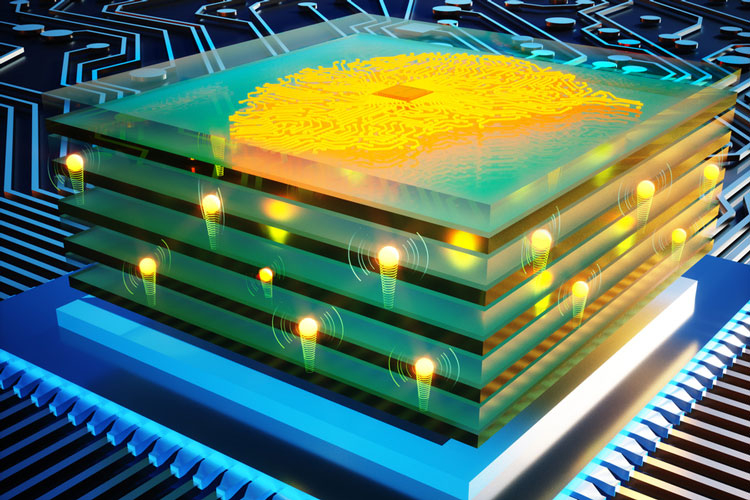
MIT scientists created proton resistors for an artificial brain
Scientists at the Massachusetts Institute of Technology have found a replacement for silicon transistors to create a new generation of powerful processors for artificial intelligence and machine learning tasks. Using simple and affordable compounds of phosphorus and silicon, scientists have created analog logic elements that operate much faster than silicon transistors and a million times faster than synapses in the human brain.
The comparison with the brain is not accidental. The neurons in the complex can be quite large, while the new logic elements – proton resistors – can be thousands of times smaller. It will be possible to fit an analog processor so powerful in the volume of the brain that it will be something unimaginable by modern standards. However, many more discoveries still need to be made for this, although the main one – the building block – scientists have already invented.
A proton resistor is an isolated area of oxide into which a certain number of protons are conducted using a powerful electromagnetic field. The field is applied to the protons to the limit, which can almost “burn the material”, as the scientists say. In practice, this voltage is about 10 V applied to a film several nanometers thick. The greater field strength in the smaller volume causes the protons to literally “teleport” into the resistor area or back if the polarity is reversed. This gives the speed of work at the nanosecond level, which is much faster than the speed of neurons in the brain.
Since any number of protons can be conditionally driven into the resistor region, this allows you to simply set weight coefficients for each of them, which eliminates the need for a long neural network training process. A neural network in the volume of an analog processor is created almost instantly, which is very important for practical work. In addition, the processor in the form of an array of resistors works normally, only data does not need to be moved between the processor and memory during processing, which also speeds up processing and saves consumption as no data is sent out of the processor.
Protons as “fillers” of resistors were not chosen by chance. Proton transporters are a solid electrolyte in the form of the popular inorganic substance phosphosilicate glass (PSG). It is silicon compatible and available. It also serves as an insulator for electrons, making the regions with resistors insulated from the electric current providing conductivity for the protons. The main achievement of the discovery was the use of phosphosilicate glass in the structure of the proton resistor, which gave it all those wonderful properties that the scientists talked about. It remains to develop the production process, architecture and operating voltage ranges, and scientists will devote the following studies to this.
Image source: Ella Maru Studio, Murat Onen / MIT


No comments:
Post a Comment