TECH
 Student Rocket Makes It To Space
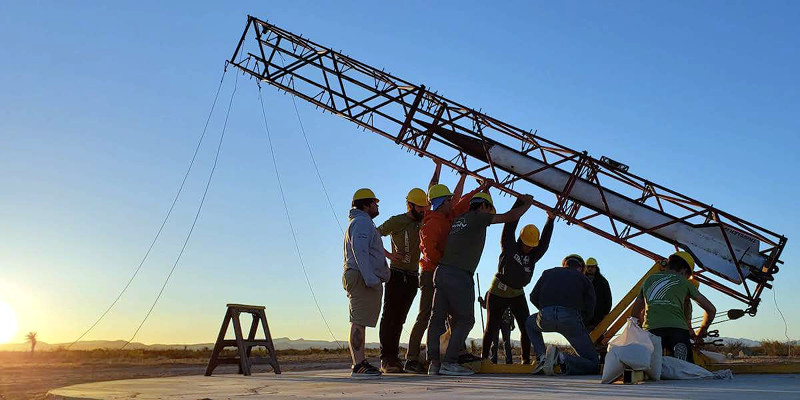
Where does the Earth's atmosphere stop and begin? It's tempting to take the approach Justice Potter Stewart did for pornography when judging the 1964 obscenity case and say "I know it when I see it." That's not good enough for scientists, though. The Kármán line is what the World Air Sports Federation (FAI) defines as space. That line is 100 km (62 miles or about 330,000 feet) above sea level. A recent student-built rocket - Traveler IV - claims to be the first fully student-designed vehicle to pass that line.
The students from the University of Southern California launched the rocket from Spaceport America in New Mexico. The new record is over twice as high as the old record, set by the same team. The rocket reached approximately 340,000, although the margin of error on the measurement is +/- 16,800 feet, so there's a slight chance they did not quite cross the line.
As you might guess from the name, there were three other rockets. The 3rd one blew up spectacularly the rockets sometimes do. The other two also blew up, although somewhat less spectacularly. The successful rocket was 13 feet tall and 8 inches in diameter. The 11 minute flight accelerated at over 17gs to the top speed of 4,970 feet / second which is over Mach 5.
The line, by the way, is not universally accepted. NASA and the US Air Force award outer space wings at 50 miles above sea level - the rocket definitely crossed that line. We do not think our rockets will get there. The first man-made object to reach space, by the way, was the V2 rocket.



No comments:
Post a Comment