TECH
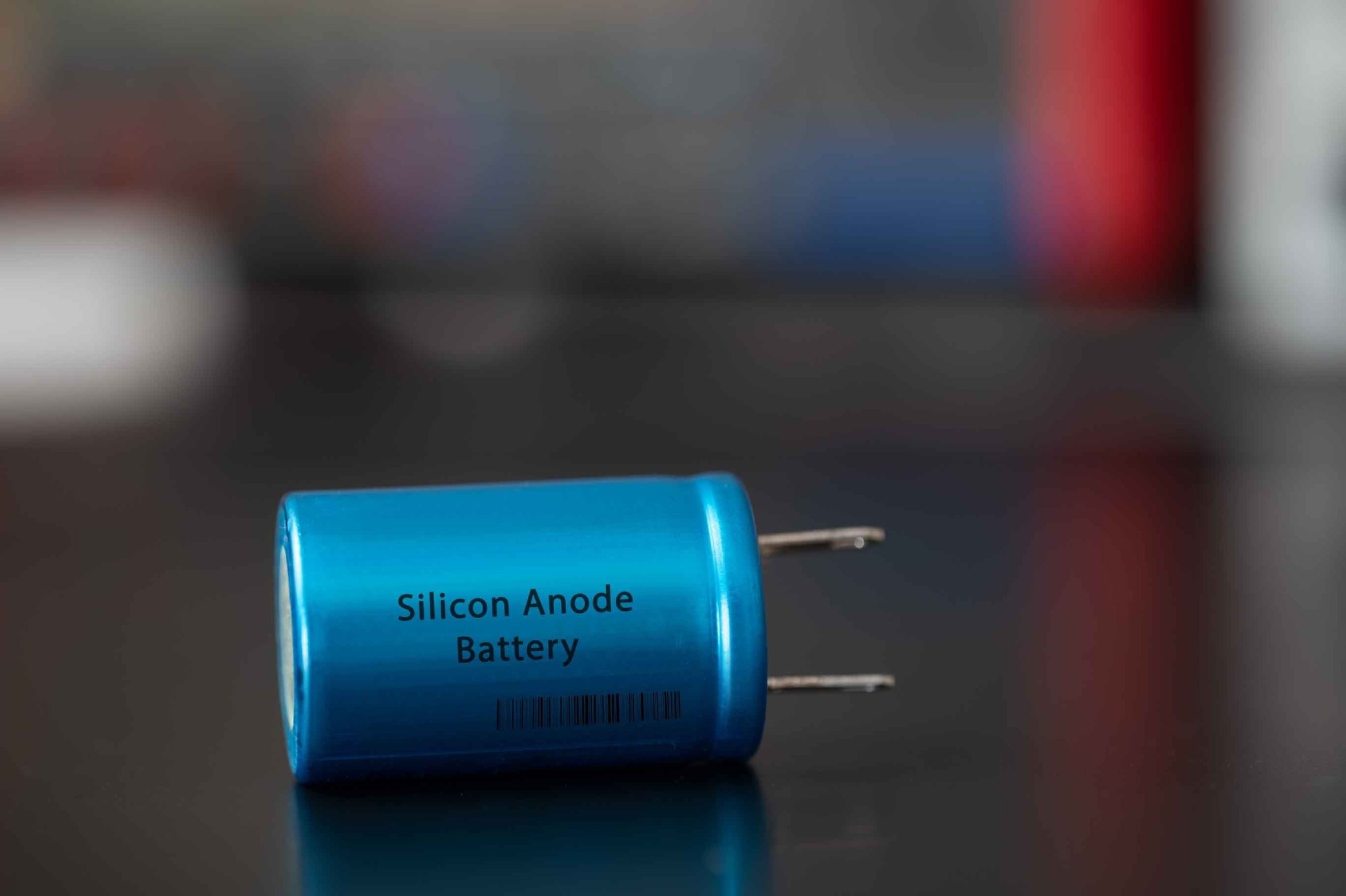
Freestanding silicon anode design improves fast charging and cycle life in lithium-ion batteries
Sejong University said Tuesday that a research team had developed a next-generation silicon anode that enables faster charging and longer battery life, a potential advance for electric vehicles and energy storage systems.
The team, led by Yang Hyeon-woo and Kim Sun-jae of the department of nanotechnology and advanced materials engineering, developed a freestanding silicon anode that maintains high performance without conventional components like current collectors, binders or conductive additives.
The findings were published online April 6 in Advanced Fiber Materials, an international journal with an impact factor of 21.3 — a measure of how often its research is cited — placing it among the more influential publications in its field, according to the university.
The researchers at Sejong University introduced a novel electrode architecture that uses carbon nanofibers as a foundational framework, a design intended to overcome the historic fragility of silicon-based components. By engineering precise hydrolysis and condensation reactions directly onto the surface of each fiber, the team achieved a uniform silicon coating.
This structural refinement not only bolsters the anode’s physical stability — preventing the degradation typical of repeated charging cycles — but also significantly enhances electrical connectivity, a crucial step toward the next generation of high-endurance energy storage.
“Silicon anodes have faced limitations due to structural damage during repeated charge and discharge cycles despite their high capacity,” Kim said. “This study presents a new design approach that could overcome those issues and be widely applied in next-generation lithium-ion batteries where fast charging and long life are critical,” Kim said.
The research was supported by the Ministry of Education’s Basic Science Research Capacity Enhancement Program and the National Research Foundation of Korea.
Silicon has long been seen as a promising anode material for next-generation lithium-ion batteries because it can store much more lithium than graphite. But silicon also expands and contracts sharply during charging and discharging, which can crack the electrode, disrupt electrical pathways and shorten battery life.
Researchers at Sejong University have developed a freestanding silicon anode designed to address that problem. Their study is published in Advanced Fiber Materials under the title "CNF-Supported Si Freestanding Anode with a Conformal Granular Si/SiOx Interphase for High-Rate, Long-Life Li-Ion Batteries."

Conventional silicon electrodes are often made by casting slurry mixtures onto current collectors, a design that can add inactive weight and introduce interfaces that become unstable during repeated cycling. By contrast, the Sejong University team designed a freestanding architecture in which carbon nanofibers, or CNFs, act as both the structural scaffold and conductive framework of the anode.
The researchers then engineered a hydrolysis-condensation reaction on the surface of each fiber so that silicon formed uniformly along the CNF network as a conformal Si/SiOx interphase. A schematic illustration outlines how this step-by-step process produced the final freestanding anode architecture.
That structure is important because it helps the electrode maintain its porous network and electrical connections even as silicon changes volume during repeated cycling.
Microscopy and spectroscopy analyses showed that the silicon-containing layer formed a thin, continuous shell around the carbon nanofiber core without excessive aggregation or overcoating. This helped preserve fiber-to-fiber junctions and open pathways for ion transport.
In electrochemical tests, the anode delivered 727.1 mAh g⁻¹ at 0.1 A g⁻¹. Under a high-rate condition of 1 A g⁻¹, it retained 79.8% of its capacity after 2,000 cycles. In full-cell tests with an NCM622 cathode, it delivered 176.5 mAh g⁻¹ and retained 91.6% of its capacity after 300 cycles.
The team also reported reduced charge-transfer resistance during cycling, indicating that the structure could support faster electrochemical transport over extended operation.
According to the researchers, that combination of structural stability and rate capability could make the design useful for applications where both fast charging and long cycle life matter, including electric vehicles and energy storage systems.
"The key difference in this work is that carbon nanofibers were used not simply as a support, but as the structural and conductive backbone of a freestanding silicon anode," said Professor Hyeon-Woo Yang. "By enabling silicon to form uniformly along each fiber, we were able to improve both structural stability and electrochemical performance."
Professor Sun-Jae Kim added, "Silicon anodes have long been limited by structural degradation during repeated cycling. This study suggests a new route to overcome that problem and expand the use of high-capacity silicon anodes in next-generation lithium-ion batteries."
Provided by Sejong University


No comments:
Post a Comment